
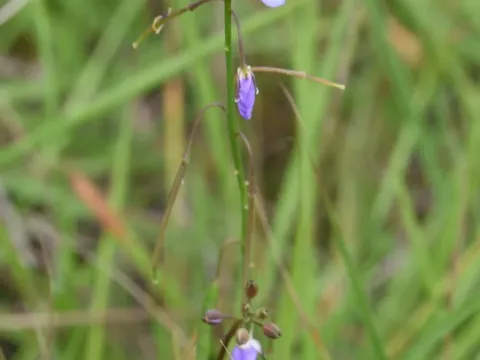
Heliophila
Heliophila
Heliophila is typically sown directly into open ground in April or May, once the threat of late frosts has completely passed. For earlier flowering, a seedling method is possible, with sowing conducted in March in protected ground.
What the section contains

Heliophila
When sowing, distribute seeds over the surface of the prepared substrate, covering them only slightly with sand or vermiculite. Ensuring good contact between the seeds and moist soil is crucial for successful germination.
Seedlings emerge uniformly within 10–14 days while maintaining a stable temperature of about +18...+20 degrees Celsius. After the first pair of true leaves appears, seedlings should be thinned or pricked out to provide sufficient growing space.
The optimal planting pattern is 20–25 centimeters between plants, which allows for the formation of lush bushes. Denser planting can lead to leggy stems and a reduction in decorative quality.
After sowing, it is recommended to mulch the soil with a thin layer to retain moisture. In southern regions, winter sowing is possible if the local climate allows the seeds to successfully overwinter in a dormant state.
Heliophila is a typical representative of South African flora, so the crop is extremely demanding regarding light intensity. For full development, it requires an open, sunny location without any shading.
The plant has moderate requirements for soil, preferring light, well-drained sandy or loamy soils. Waterlogging is fatal for Heliophila, as it provokes rotting of the root system.
The crop has low resistance to excessive air and soil humidity. The optimal pH level ranges from neutral to slightly acidic, which facilitates the absorption of essential micronutrients.
During the active growth period, the plant requires regular but moderate watering. Under drought conditions, the flowering intensity drops sharply, and leaves may turn yellow prematurely.
Fertilization should be limited, using complex mineral fertilizers with reduced nitrogen content. An excess of nitrogen fertilizers leads to the growth of green mass at the expense of flower buds.
The primary enemy of Heliophila is excessive soil moisture, which leads to the development of fungal diseases such as gray mold and root rots. Strict adherence to the watering schedule serves as the best prevention.
Pests rarely infest this crop on a massive scale; however, in greenhouses or dense plantings, aphid attacks are possible. Authorized contact insecticides should be used for control.
Spider mites may appear on plants under conditions of extreme heat and low air humidity. Regular sprinkling or treatment with acaricides helps to contain the infestation centers.
Slugs and snails pose a threat to young seedlings in early spring. To protect plantings, it is recommended to use physical barriers or bait traps around the flower bed.
Viral infections, manifested as leaf mosaic patterns, cannot be treated. Infected specimens should be immediately removed from the plot to prevent the spread of the pathogen.
Harvesting in the context of this ornamental crop implies collecting seeds for the next season. Seed pods ripen unevenly, so the process is carried out in several stages.
A change in pod color from green to yellow-brown serves as a signal for harvesting. It is important to collect the seeds before they begin to shed spontaneously from the opening pods.
The collected material should be dried in a ventilated, dry area in paper bags or on fabric. After final drying, the seeds are cleaned of plant debris and stored in a cool place.
When using Heliophila as a cut flower, stems should be harvested at the semi-opened bud stage. This extends the vase life of the bouquet up to ten days with daily water changes.
To maintain the aesthetic appeal of the flower bed, spent inflorescences should be removed. This stimulates the plant to produce new buds and extends the overall flowering period until the end of summer.