
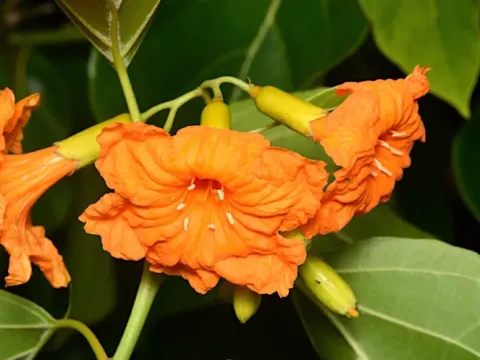
Cordia aurantiaca
Cordia aurantiaca
Cordia aurantiaca is an ornamental plant species belonging to the Boraginaceae family. It is widely recognized for its vibrant orange flowers and is commonly grown as a shrub or small tree in suitable climates.
What the section contains
Cordia aurantiaca
Originating from Central and South America, this species thrives in tropical environments. Its distribution area is limited by its intolerance to frost, making it suitable mainly for tropical and subtropical landscaping.
Successful cultivation requires full sun exposure to promote blooming. It is sensitive to cold temperatures, and for optimal growth, it should be kept in environments above 20 degrees Celsius.
The plant performs best in well-draining, fertile soils. Soil structure should be loose to ensure that oxygen reaches the roots, as the species is sensitive to waterlogged conditions that may occur in compacted soils.
Regular maintenance practices, including balanced fertilization and occasional pruning, are essential to maintain its health and aesthetic shape. Consistent watering during dry spells is necessary to prevent premature leaf drop.
Common pests affecting Cordia aurantiaca include spider mites and scale insects, which often thrive in environments with low air humidity.
Fungal diseases related to root rot are a significant risk if the soil remains excessively moist for long periods. Proper drainage is the most effective preventative measure.
In cases of heavy infestation, insecticidal soaps or systemic treatments should be applied to manage pest populations effectively.
Monitoring the foliage for signs of chlorosis or leaf spots is crucial for early detection of nutrient deficiencies or potential fungal pathogens.
Maintaining a clean cultivation area and removing fallen debris helps reduce the reservoir for potential plant diseases and pests.