
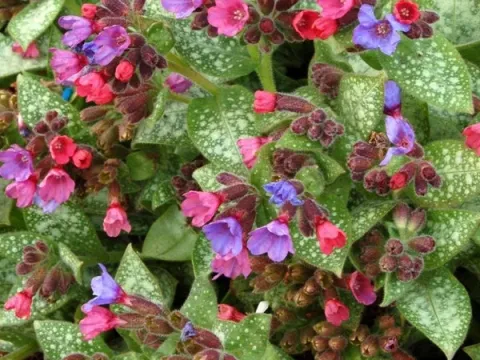
Hill lungwort
Pulmonaria collina
Hill lungwort (Pulmonaria collina) is a perennial flowering plant belonging to the Boraginaceae family. It is typically found in temperate forest zones across Europe.
What the section contains
Hill lungwort
The plant thrives in partial to full shade, making it an excellent choice for woodland garden settings. Intense sunlight should be avoided to prevent leaf scorch and dehydration.
Soil requirements include well-drained, nutrient-rich loam that retains consistent moisture. Adding organic compost can significantly improve soil structure and fertility.
Regular but moderate watering is necessary during the growing season. The plant exhibits high frost tolerance, adapting well to cold climates without specific protection.
Apart from its ornamental value, Pulmonaria collina is valued in herbal traditions for its medicinal properties and serves as a vital early-season nectar source for bees.
Powdery mildew is the primary pathological threat to lungwort, appearing as white patches on foliage during periods of high humidity and poor air circulation.
Slugs and snails often feed on the foliage, leaving irregular holes and slime trails, which can severely damage the aesthetic appeal of the plant.
Root rot occurs if the soil is too heavy or waterlogged, which suffocates the roots and eventually kills the plant from the base upwards.
Integrated pest management, such as manual removal of slugs and proper thinning of the plants, is the most effective approach for maintaining health.
Fungicidal applications should be reserved for severe cases, prioritizing cultural practices like weeding and adequate spacing to prevent disease outbreaks.