
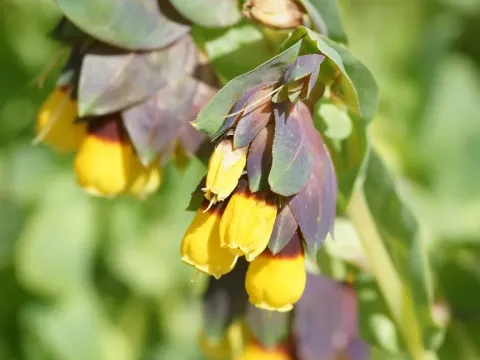
Honeywort
Cerinthe major
Sowing Cerinthe major seeds directly into the garden should occur once the danger of frost has passed, typically in late spring.
What the section contains
Honeywort
For earlier flowering, seeds can be started indoors in biodegradable pots about six weeks before the last expected frost date.
It is crucial to sow in individual pots because the plant has a taproot system that is highly sensitive to root disturbance during transplanting.
Seeds should be covered with about 1 centimeter of soil and kept at a temperature range of 18 to 20 degrees Celsius for successful germination.
Adequate spacing, around 30 to 45 centimeters between individual plants, ensures healthy growth and minimizes the risk of fungal infections.
Honeywort belongs to the Boraginaceae family and is native to the Mediterranean region, which dictates its specific environmental preferences.
The plant thrives in full sun, though in extremely hot climates, it can tolerate partial shade to protect its foliage from leaf scorch.
It prefers well-draining, moderately fertile soil, as overly rich soil encourages excessive foliage growth at the expense of its unique nectar-rich flowers.
Watering requirements are moderate; the plant establishes well in dry conditions but benefits from consistent moisture during the peak of summer.
Cerinthe major is generally grown as an annual in cooler regions, as it lacks the frost tolerance required to survive the winter in non-Mediterranean climates.
Slugs and snails are the most significant pests for Cerinthe major, especially in moist weather when they target the succulent leaves and seedlings.
Poor air circulation or excessively damp conditions can invite fungal issues, such as powdery mildew, which affects the plant's aesthetic quality.
Aphids occasionally colonize the soft tips of the stems and the flower bracts, requiring monitoring and potential intervention with insecticidal soap.
Good garden hygiene, such as removing debris and weeds around the plants, significantly reduces the population of potential pests and disease spores.
To avoid root-related diseases, ensure that the soil remains loose and well-draining, avoiding any waterlogging throughout the active growing season.