
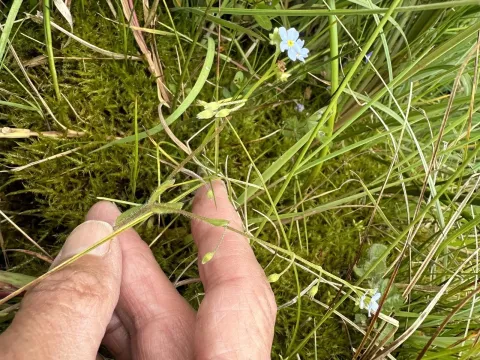
Creeping forget-me-not
Myosotis secunda
The creeping forget-me-not (Myosotis secunda) is a herbaceous perennial plant belonging to the Boraginaceae family. It is distinct for its specific adaptation to moist and wet habitats, distinguishing it from other species within the Myosotis genus that prefer drier environments.
What the section contains
Creeping forget-me-not
Botanically, the plant features creeping rhizomes that allow it to spread across the soil surface effectively. Its stems are often ascending or prostrate, capable of rooting at nodes, which contributes to its ability to form extensive ground cover in favorable conditions.
Native to wetland areas and stream banks in Europe, this species requires a constant water supply for optimal growth. It thrives in acidic to neutral soils that are rich in humus and maintain high moisture content throughout the growing season.
Climate requirements for this culture include temperate conditions with mild summers. The plant is noted for its high frost resistance, making it suitable for year-round cultivation in northern regions without the need for extensive seasonal protection.
Regarding its utility, the creeping forget-me-not is primarily used in landscaping for riparian zones and shaded gardens. It serves as an excellent ground-covering plant that can stabilize soil and add aesthetic value to damp areas where other ornamental plants struggle.
Powdery mildew is a significant threat to Myosotis secunda, especially in conditions where air circulation is restricted. The fungus can quickly spread across the foliage, affecting both the health and the visual appeal of the plants.
Root rot remains the most common disease associated with over-saturated soils. When water is stagnant for extended periods, the roots lose their ability to take up nutrients, leading to rapid decay of the entire stem system.
Aphids are the most frequent insect pests, clustering on the young buds and succulent stems to feed. Their presence not only drains the plant's resources but often precedes the appearance of secondary infections or viral agents.
Slugs and snails frequently target the succulent leaves of the creeping forget-me-not due to their preference for damp environments. These pests can cause significant defoliation if the population density is not managed effectively.
Effective pest and disease management involves maintaining optimal plant spacing to promote airflow. Additionally, removing infested plant debris and providing adequate drainage in containerized or garden settings are essential cultural practices.