
Cordia subcordata
Cordia subcordata
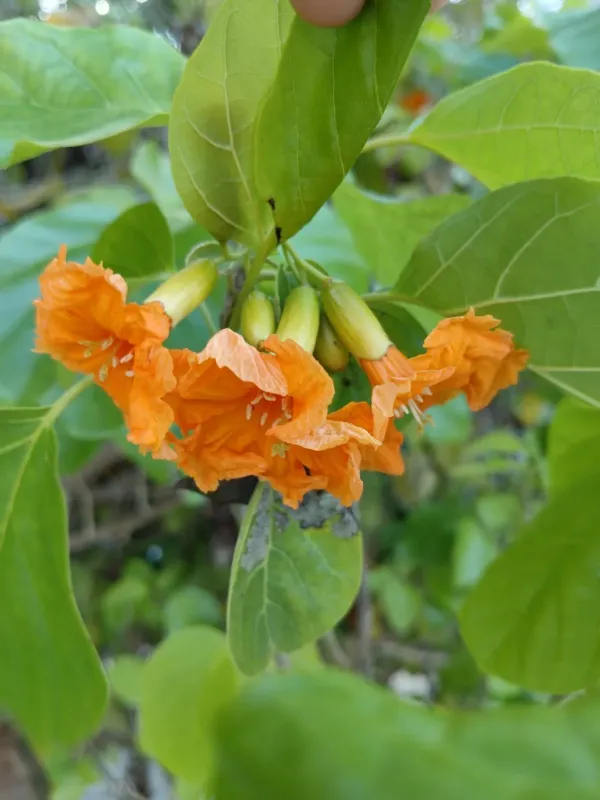
Description
Growing requirements
Cordia subcordata, commonly known as the sea trumpet, is a species of flowering tree in the Boraginaceae family. It is an evergreen tree that can grow up to 15 meters in height and is widely recognized for its beautiful, bright orange, trumpet-shaped flowers.
The native range of this species extends across the tropical regions of the Indo-Pacific, including islands in the Pacific Ocean and coastal areas of East Africa and Asia. It is highly tolerant to salt spray, making it a key species for coastal reforestation projects.
The tree thrives in tropical climates where temperatures remain consistently warm throughout the year. It requires full sunlight to develop a dense canopy and cannot tolerate frost, which makes its cultivation limited to tropical and subtropical latitudes.
Soil requirements for Cordia subcordata are relatively flexible, though it prefers sandy, well-draining soils. It is well-adapted to saline conditions, which allows it to colonize beach edges and rocky shorelines where other species might fail.
The wood of this tree is highly valued for its durability and aesthetic appeal. It is historically significant for its use in creating canoes, bowls, and artisanal furniture due to its lightweight nature and resistance to insect damage and fungal decay.
Main diseases and pests
In managed landscapes, Cordia subcordata can be susceptible to root rot if planted in poorly drained soil, as the roots require a high level of oxygenation to function properly.
Various insects, such as leaf-eating caterpillars and aphids, may infest the foliage, particularly during the rainy season when young, tender growth is abundant.
Preventative measures include maintaining proper canopy spacing to ensure sufficient airflow and sunlight penetration, which discourages the development of fungal spores.
Farmers should conduct routine monitoring for signs of distress, such as yellowing leaves or stunted growth, which may indicate nutrient deficiencies or localized pest activity.
Integrated pest management strategies are recommended, focusing on maintaining tree vigor through controlled irrigation and avoiding excessive use of broad-spectrum chemical pesticides.