
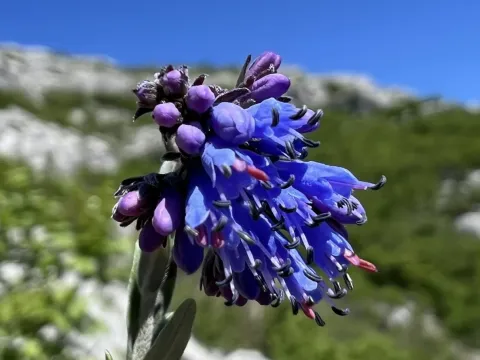
Moltkia petraea
Moltkia petraea
Sowing Moltkia petraea is typically carried out in the spring period when the soil has warmed up sufficiently. The optimal time for seeding is April or early May, which allows the plant to adapt to environmental conditions before the onset of summer heat.
What the section contains
Moltkia petraea
To accelerate germination, seeds may require stratification because they have a hard outer shell. Sowing is performed in loose substrate to a depth of no more than 0.5-1 cm, ensuring constant moderate moisture on the soil surface until the first shoots appear.
When growing from seeds, it is important to note that the plant's development is quite slow. At the initial stage, it is crucial to avoid overwatering to prevent rotting of the root system, which is not yet sufficiently developed in seedlings.
An alternative method of propagation is cuttings, which are performed in summer. Young shoots are taken from semi-lignified parts of the bush and placed in a light sandy substrate under cover to maintain the necessary humidity.
Transplanting seedlings to a permanent location is carried out after the threat of night frosts has passed. Plants are placed considering their future growth, maintaining distance between bushes to ensure proper aeration of the plantings.
Moltkia petraea belongs to the Boraginaceae family and in its natural habitat prefers stony areas, limestone slopes, and rocky outcrops. This shapes its main requirements for growing conditions: the presence of excellent drainage and sufficient sunlight.
The culture is extremely demanding regarding soil composition: it develops best in sandy or stony soils with a neutral or slightly alkaline pH. Heavy, clayey, and permanently moist soils are destructive to this plant, as they provoke root rot development.
The plant is quite tolerant to climatic conditions, demonstrating high drought resistance. It is ideal for regions with hot, dry summers, while successfully overwintering in temperate climates provided there is no stagnant water in the root zone.
For successful cultivation, it is necessary to choose well-lit areas protected from strong winds. In partial shade, the plant may lose its compact shape, become leggy, and reduce flowering intensity, which negatively affects the ornamental quality of the plantings.
During care, it is important to observe the watering regime, excluding moisture stagnation. Mature specimens require practically no additional watering and can thrive on atmospheric precipitation, making the culture promising for xeriscape gardening.
The main threat to Moltkia petraea is soil overwatering, which leads to the development of fungal diseases of the root system. If water stagnates near the roots, rots develop quickly and are practically impossible to treat.
Regarding pests, common insects associated with the Boraginaceae family, such as aphids or spider mites, can be found on the plants. During dry periods, they may attack young leaves, sucking out cell sap, which leads to the deformation of shoots.
To prevent pest infestation, it is recommended to inspect plants at the beginning of the growing season. If the first signs of insect activity are detected, it is necessary to apply insecticides or biological preparations that comply with safety regulations.
Powdery mildew can also become a problem if the plantings are excessively dense and lack sufficient air circulation. Regular weeding and the removal of fallen leaves around the bushes significantly reduce the risk of pathogenic microflora.
Using gravel or small pebble mulch around the base of the bush allows stems to be isolated from direct contact with damp soil, which serves as an effective preventive measure against most infectious diseases of the culture.