
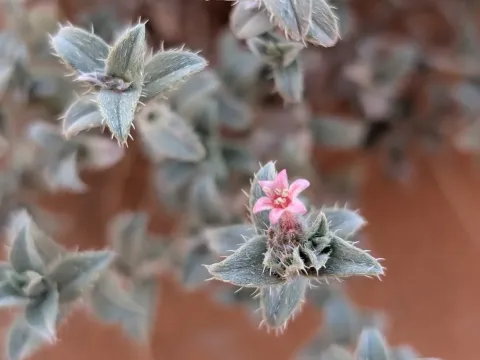
Moltkiopsis
Moltkiopsis
Moltkiopsis is a monotypic genus of flowering plants belonging to the Boraginaceae family. Its primary representative, Moltkiopsis ciliata, is uniquely specialized to survive in some of the most arid environments on the planet.
What the section contains

Moltkiopsis
The natural habitat of this plant spans across Northern Africa and parts of Western Asia. It typically thrives in sandy and rocky desert landscapes, where it plays an important role in stabilizing shifting soil and preventing land erosion.
Botanically, Moltkiopsis is classified as a small shrub with distinctive pubescence. This physical covering serves as a critical defense mechanism against intense solar radiation, reflecting excess light and minimizing transpirational water loss.
Agricultural success with this species requires a deep understanding of its soil preferences. It necessitates exceptionally well-drained substrate, as it is highly susceptible to root rot if moisture levels remain consistently high or stagnant in the rhizosphere.
Economically, while not a mainstream agricultural crop, it is valued for its potential in desert reclamation projects. Its ability to colonize nutrient-poor soils makes it a candidate for restoring degraded landscapes in arid climate zones.
The primary threats to Moltkiopsis populations in the wild are linked to overgrazing and the encroachment of desertification, which reduces the plant's ability to propagate and establish new colonies across its historical range.
In terms of pathological threats, the plant is relatively robust against common agricultural pests. However, it can be vulnerable to fungal diseases during prolonged periods of high humidity or excessive irrigation, which are unnatural for its biology.
Specific insect pests that target wild desert flora may occasionally feed on Moltkiopsis, but these rarely cause significant economic damage in natural settings. Integrated pest management should focus on preserving the plant's natural resistance.
Environmental stressors such as unseasonable changes in rainfall patterns can impact the survival rates of young seedlings. Careful selection of planting sites is essential to avoid areas prone to accidental water accumulation or high salt concentration.
Given its specialized nature, further research is required to standardize cultivation practices. Any attempt at intensive farming must prioritize ecological compatibility to ensure the long-term viability of the plant species in controlled environments.