
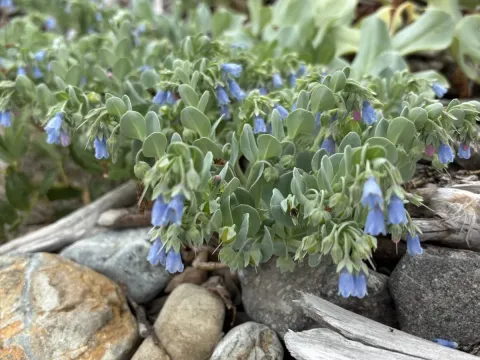
Mertensia simplicissima
Mertensia simplicissima
Mertensia simplicissima is a distinct perennial plant species belonging to the Boraginaceae family. Known for its specific adaptation to coastal environments, it exhibits unique physiological traits that allow it to thrive in saline and windswept conditions.
What the section contains
Mertensia simplicissima
The botanical structure of this plant includes succulent foliage and delicate bell-shaped flowers, which are characteristic of the Mertensia genus. Its biological cycle is optimized for cooler coastal climates, where temperature fluctuations are moderated by oceanic influence.
Cultivation requirements for Mertensia simplicissima focus primarily on soil composition. It demands a highly porous, gritty, or sandy substrate that prevents moisture accumulation around the crown, as standing water is a primary cause of failure in domestic settings.
The climate requirements involve providing ample indirect light and good air circulation. In cultivation, protecting the plant from extreme heat and ensuring proper drainage is essential for maintaining its health throughout the growing season.
The agricultural and ornamental use of this species remains niche, often restricted to botanical gardens and specialized collectors. It serves as a valuable subject for studying plant stress tolerance and biodiversity conservation in fragile habitats.
The primary threats to Mertensia simplicissima are related to improper horticultural practices, specifically soil drainage issues. Root rot pathogens proliferate rapidly if the substrate is too dense or waterlogged, which can destroy the plant within a short period.
Pests such as aphids and spider mites can infest the foliage, particularly under stress conditions or in confined greenhouse spaces. Integrated pest management strategies are recommended to maintain plant health without resorting to harsh chemical treatments.
Competition from more aggressive invasive weeds can easily overwhelm the slow-growing Mertensia simplicissima. Consistent weeding and site maintenance are necessary to ensure the plant receives adequate access to nutrients and light.
Nutrient deficiencies, specifically regarding micronutrients in artificial substrates, can lead to foliage yellowing and reduced vigor. Monitoring soil pH and mineral balance is vital for the long-term success of the crop.
Furthermore, human-induced environmental changes continue to threaten natural populations of this species. Cultivating it in protected environments acts as a vital tool for ex-situ conservation and future research.