
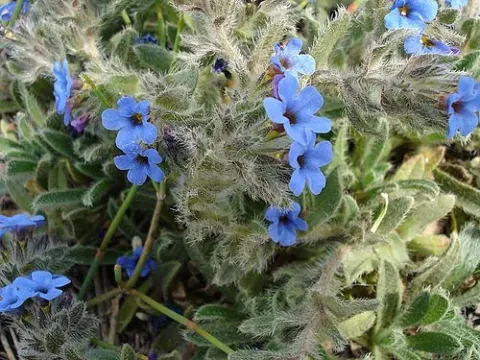
Alkanna
Alkanna
Sowing of Alkanna tinctoria is typically performed in the spring, once the soil warms up to 10–12 degrees Celsius. The seeds of the culture are characterized by slow germination, therefore, preliminary stratification can significantly accelerate the sprouting process under field conditions.
What the section contains

Alkanna
The optimal sowing pattern involves row spacing of about 45–60 centimeters, which ensures enough space for the plant to develop a powerful root system. The seed planting depth should not exceed 1–2 centimeters, as the small seeds are sensitive to soil density.
Alkanna belongs to the Boraginaceae family, which determines its high resistance to arid conditions during the initial stages of growth. In regions with a mild climate, winter sowing is possible, which allows for earlier and more uniform emergence in the following season.
An important factor during sowing is the selection of a plot free from stubborn rhizomatous weeds, as Alkanna develops extremely slowly in its first year of life. Competition with weeds during this period can lead to crop failure or a significant reduction in productivity.
After mass emergence, it is recommended to thin the plants, leaving a distance of about 20–25 centimeters between plants in a row. This is necessary to ensure light penetration and prevent the development of fungal diseases in dense plantings.
The crop has specific requirements regarding light: Alkanna is a light-loving plant, so open, well-warmed plots should be chosen for its cultivation. A lack of sunlight leads to a decrease in the concentration of coloring substances in the roots.
Light, well-drained sandy or sandy loam soils with a neutral or slightly alkaline reaction are preferred. In heavy clay soils, the plant is stunted due to moisture stagnation, which leads to root system decay.
Alkanna is quite drought-resistant, however, to obtain a commercial root harvest in industrial farming, moderate irrigation must be provided during the active vegetation period. Excessive moisture combined with low temperatures is detrimental to the plant.
The application of mineral fertilizers, especially phosphorus-potassium groups, contributes to better development of the taproot, where the main biologically active components accumulate. Nitrogen fertilizers should be limited to stimulate the growth of the underground part rather than the green mass.
The plant is well-adapted to the Mediterranean climate, so in temperate zones, it may require protection during the first years of life. Good soil aeration is a key condition for successful overwintering and the proper formation of the root system.
The economic value of Alkanna lies primarily in its roots, which contain a unique natural substance — alkannin, which possesses pronounced coloring properties. The crop's productivity is measured by the mass of dry raw material harvested per hectare.
Maximum yield of coloring pigments is observed in plants aged 2–3 years. Early harvesting of roots is impractical, as the content of active substances in young tissues remains low, making industrial processing economically unprofitable.
Yield depends on soil structure and the number of sunny days in the season. Under optimal conditions, a high yield of quality plant material can be achieved, which is actively used in the cosmetic and food industries to create natural dyes.
After harvesting, the roots undergo a drying process at moderate temperatures to preserve the chemical structure of the coloring component. Oxidation due to overheating can lead to a loss of color intensity and a change in shade, which reduces the product's market value.
To increase yields, mulching elements are introduced into agronomic practices, allowing for stable soil moisture and preventing root overheating in the summer. Rational crop rotation also has a positive effect on harvest results.
The main threat to Alkanna is root rot, which occurs due to the violation of moisture regimes and poor soil drainage. Water stagnation provokes the development of pathogenic fungi that quickly attack the taproot, leading to the death of the entire plant.
Pests, such as aphids and various types of leaf beetles, can cause damage to the above-ground part of the plant during the flowering period. Although they rarely destroy the culture completely, severe infestation weakens metabolism and slows down the accumulation of nutrients in the roots.
Powdery mildew is a typical disease under conditions of high air humidity and poor wind circulation. Preventive measures include the timely removal of infected leaves and adherence to plant density norms in the field.
Wireworms can damage the root systems of young plants, making control of this pest an essential step in soil preparation before sowing. The use of green manure and deep autumn plowing helps significantly reduce the population of soil pests.
Weed control is important not only due to resource competition but also because many weeds are reservoirs for viral infections. Regular inter-row cultivation helps keep the crops clean and reduces the risks of disease spread.
Harvesting Alkanna is carried out at the end of the vegetative period, when the plant reaches the resting phase and the concentration of alkannin in the roots becomes maximum. This usually happens in the autumn of the second or third year of the crop's life.
The harvesting process requires care, as damage to the root leads to sap loss, which contains the main coloring pigment. Specialized machinery is used to cut the soil layer to the depth of the plant's root system.
After extraction from the ground, the roots are thoroughly cleaned of soil residue, washed, and sorted. It is important to avoid prolonged exposure of the raw material to direct sunlight to prevent photochemical degradation of coloring substances before drying.
Primary processing includes grinding the roots to accelerate the dehydration process. Drying should take place in well-ventilated areas or specialized drying chambers with temperature control not exceeding 40–45 degrees Celsius.
Storage of the finished product is carried out in dry, dark conditions, as Alkanna pigments are sensitive to ultraviolet radiation and oxidation. Adherence to these rules ensures the preservation of product quality until it is delivered to the consumer.