
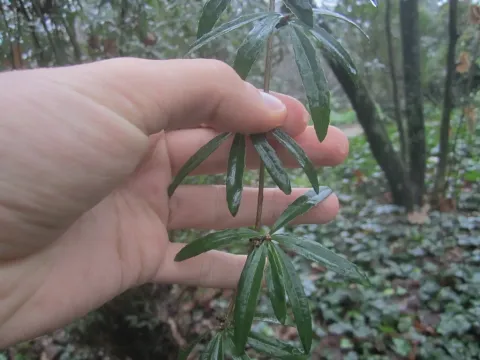
Veitch barberry
Berberis veitchii
Veitch barberry (Berberis veitchii) is an elegant evergreen shrub belonging to the Berberidaceae family, native to the mountainous regions of central and western China. It is highly valued in horticulture for its dense, glossy foliage and architectural form.
What the section contains
Veitch barberry
The shrub thrives in well-drained, fertile soil and prefers a neutral to slightly acidic pH level. It is essential to avoid poorly drained sites, as waterlogging can cause root decay, which is detrimental to the plant's health and longevity.
While the species is relatively hardy, it performs best in positions sheltered from cold, drying winds. In colder climates, providing winter protection for young plants helps ensure they establish successfully and maintain their evergreen habit throughout the year.
Regarding sunlight, Veitch barberry exhibits versatility by tolerating both full sun and partial shade. However, optimal foliage density and overall vigor are achieved when the plant receives adequate light exposure throughout the growing season.
Maintenance practices involve periodic mulching to suppress weeds and retain soil moisture. Pruning should be carried out after the flowering period to maintain the desired shape and remove any dead or crossing branches.
Like many species in the Berberis genus, this shrub is susceptible to fungal issues such as powdery mildew and rust. Applying fungicide treatments during the early spring can effectively prevent these infections from taking hold.
Aphids represent the most significant insect pest for this plant, often clustering on the undersides of leaves and at the tips of new growth. Using systemic insecticides or neem oil can help manage infestations effectively.
Improper watering practices often lead to physiological stress, making the shrub more vulnerable to secondary infections. Keeping the foliage as dry as possible during irrigation can help mitigate the risk of fungal spread.
During the winter months, rodents might feed on the bark, potentially girdling the stems. Placing protective mesh around the base of the plant provides an effective physical barrier against these animals.
Regular inspection of the plant's foliage and stems is the most effective strategy for early pest detection. Maintaining good air circulation within the shrub canopy also significantly reduces the likelihood of disease outbreaks.