
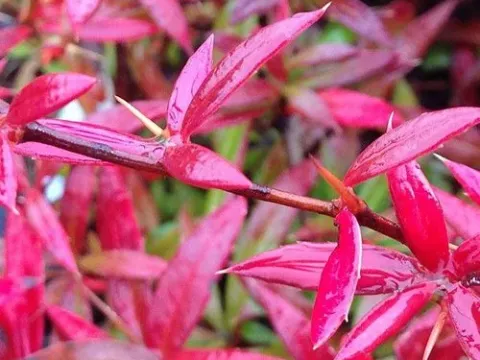
Wisleyensis Barberry
Berberis wisleyensis
Wisleyensis Barberry (Berberis wisleyensis) is a distinctive hybrid shrub belonging to the Berberidaceae family, highly regarded for its aesthetic value in garden design. Originating from controlled selection, this plant is well-adapted for ornamental use in temperate climate zones.
What the section contains
Wisleyensis Barberry
The shrub thrives in well-drained, fertile soil and requires a location with full sun to partial shade. Proper sunlight exposure is essential to maintain the vibrant color of its foliage throughout the growing season, contributing to the overall visual appeal of the landscape.
Regarding climate, this barberry is generally hardy but benefits from protection against harsh winter winds. Its water requirements are moderate, and it is considered relatively drought-tolerant once established in the soil, though young plants require regular irrigation during their first year.
Good agricultural practices for this culture involve light pruning in early spring to encourage healthy, dense growth. Maintaining an open structure within the bush helps prevent the accumulation of moisture, which is essential for the long-term health and vigor of the plant.
In terms of agricultural and horticultural use, Wisleyensis Barberry is primarily utilized for landscape architecture. It serves perfectly as a low hedge, a focal point in borders, or as part of mixed shrub groupings due to its uniform growth habit and manageable size.
Common threats to the health of the plant include powdery mildew and rust, which often occur in humid, poorly ventilated environments. Implementing regular sanitation by removing dead foliage and thinning out the center of the shrub is the primary method of disease control.
Pest management focuses on aphids and sawflies, which are the most frequent insect threats. Monitoring the underside of leaves for early signs of infestation allows for timely application of insecticidal soap or specialized horticultural oils, ensuring the shrub remains lush and healthy.