
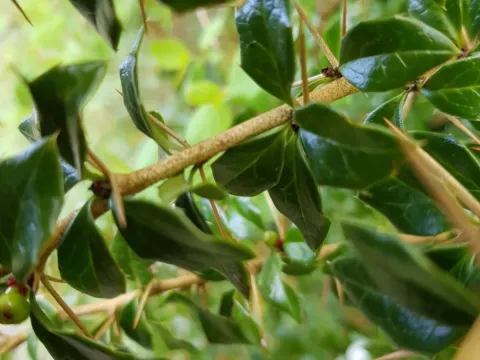
Warty barberry
Berberis verruculosa
Planting of the warty barberry is recommended in the spring before the active sap flow begins or in the autumn, before the onset of persistent frosts. For container-grown plants, planting dates are flexible and cover the entire growing season.
What the section contains
Warty barberry
The optimal time for sowing seeds is in the autumn, as they require mandatory stratification under natural conditions for 3 to 4 months. If sowing in the spring, seeds must be pre-chilled in damp sand at low temperatures.
When selecting a site, keep in mind that this species prefers sunny locations, although it can tolerate light shade. It is important to provide sufficient space between bushes, at least 1.5–2 meters, to ensure proper air circulation.
Preparatory work involves digging a planting pit approximately 50x50x50 centimeters in size. It is recommended to place a drainage layer of sand or gravel at the bottom of the pit, especially if the site has a high water table.
When planting, the root collar of the shrub should not be buried, but kept level with the soil surface. After planting, water the root zone thoroughly and mulch with peat or wood chips to retain moisture and suppress weeds.
The warty barberry belongs to the Berberidaceae family and is a compact evergreen shrub native to the mountainous regions of Western China.
The plant has modest soil requirements but thrives best in light, well-drained loamy soils with a neutral or slightly alkaline pH level.
The crop possesses good drought tolerance and does not withstand stagnant moisture in the root zone. High soil humidity combined with low temperatures can lead to root rot.
To maintain the visual appeal of the bush, periodic sanitary and formative pruning is required. This should be done in spring to remove dead, damaged, or overcrowded shoots, which are covered in sharp thorns.
The plant is moderately frost-hardy. In harsh, snowless winters, young specimens may suffer from cold damage, so light protection with spruce branches or garden fleece is recommended in cold regions.
The main threat to the plant is powdery mildew, which manifests as a white coating on leaves and shoots. To control it, spray with sulfur-based fungicides or systemic chemical treatments.
Occasionally, the barberry aphid may appear, feeding on sap from young leaves and causing deformation. In case of heavy infestation, contact-action insecticides are recommended.
The barberry moth is a dangerous pest whose larvae can consume a large portion of the leaf blade in a short time. Regular inspection of the bushes allows for early detection and the use of biological control agents.
Bacterial cancer, appearing as cracks and swellings on branches, is a difficult disease to treat. Affected parts must be cut away immediately, including some healthy tissue, and destroyed by burning.
Prevention of all diseases involves proper irrigation, avoiding overly dense foliage, and keeping the area around the base of the plant free from fallen leaves, which can harbor pathogens through winter.