
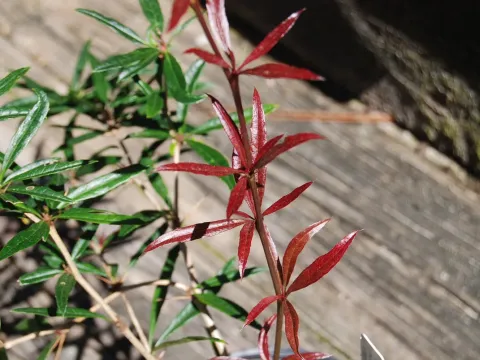
Warty barberry
Berberis replicata
The Warty barberry (Berberis replicata) is an evergreen ornamental shrub belonging to the Berberidaceae family. Native to the mountain regions of southwest China, it has become a popular choice for landscape architecture due to its dense, rigid structure and attractive foliage.
What the section contains
Warty barberry
The plant features small, leathery leaves with revolute margins and sharp spines along the stems. During the spring, it produces clusters of vibrant yellow flowers, followed by dark, ornamental berries that add significant aesthetic value to the garden.
This species thrives in well-drained, fertile soil with a neutral to slightly acidic pH level. It is essential to ensure that the planting site has excellent drainage, as the roots are sensitive to waterlogging, which can lead to rapid decay.
Regarding climate, Berberis replicata prefers sunny locations but can tolerate partial shade. While it is hardy in many zones, it benefits from protection against cold, drying winter winds, which can damage the evergreen leaves if left completely exposed.
Agricultural care for this shrub involves regular maintenance pruning to sustain its desired shape and density. Mulching around the base of the plant helps retain soil moisture during the summer months while suppressing weed growth effectively.
The most common disease affecting this shrub is powdery mildew, which appears as a white coating on the leaves during humid spells. Proper spacing between plants is crucial to improve air circulation and reduce the likelihood of fungal outbreaks.
Rust fungus can also be a significant issue, manifesting as yellowish or orange pustules on the undersides of the leaves. Infected plant parts should be pruned immediately to stop the spread of spores to healthy branches.
Pest problems usually involve barberry aphids, which target the tender new growth. Regular inspections are necessary, especially during the spring, to identify early infestations before they cause visible damage or stunt the plant.
Integrated pest management strategies should be employed, utilizing insecticidal soaps or systemic pesticides when necessary. Choosing resistant varieties or cultivars is the best long-term strategy for minimizing chemical interventions.
Maintenance of overall plant vigor through proper watering and fertilizing schedules serves as the first line of defense against pests and diseases. A healthy, stress-free plant is significantly more capable of resisting common horticultural threats.