
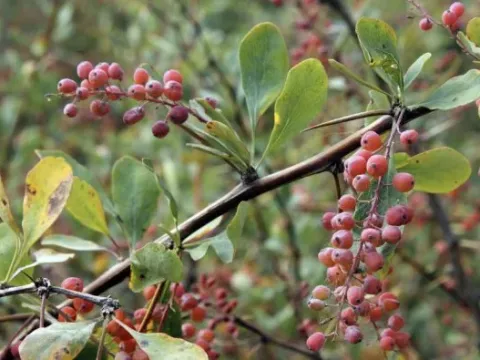
Turkmen barberry
Berberis turcomanica
Turkmen barberry (Berberis turcomanica) is a distinct species within the Berberidaceae family, originating from the arid mountain regions of Central Asia. This perennial deciduous shrub is characterized by its high tolerance to drought and poor soil quality.
What the section contains
Turkmen barberry
The plant thrives in sunny locations with well-drained, rocky or sandy soil substrates. It is exceptionally resilient, adapted to thrive where other fruit-bearing species fail, making it a valuable subject for sustainable horticulture in semi-arid environments.
Agricultural success depends on providing adequate spacing during planting to ensure proper air circulation, which prevents the development of fungal pathogens. Though hardy, the plant responds positively to occasional deep watering during the fruit-set period.
Proper pruning is essential for maintaining the health of the plant and maximizing fruit yield. By removing dead wood and thinning the center of the shrub, growers can ensure that sunlight reaches the inner branches, promoting uniform ripening.
Beyond its culinary uses, the Turkmen barberry is highly valued for its medicinal properties, specifically the content of berberine in its roots and bark. Its fruit is also widely consumed fresh or processed in traditional regional cuisine.
Common threats to Berberis turcomanica include powdery mildew and leaf spot, which are often exacerbated by poor air circulation. Maintaining a clean garden environment and removing fallen leaves help to significantly reduce the risk of infection.
Aphids remain the most frequent pest challenge, particularly during the spring growth flush. Integrated pest management strategies, such as introducing beneficial insects or using organic sprays, are typically sufficient to keep populations under control.