
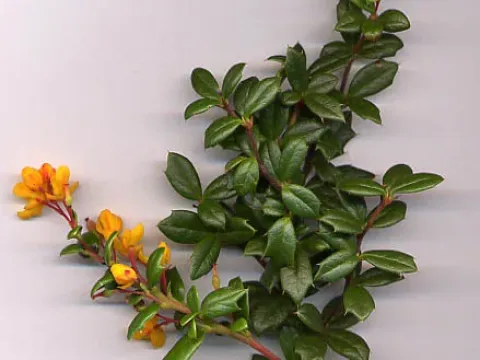
Forrest's Barberry
Berberis forrestii
Forrest's Barberry (Berberis forrestii) is a perennial evergreen shrub belonging to the Berberidaceae family. Native to the mountainous regions of Yunnan, China, this species is highly valued in horticulture for its year-round decorative foliage.
What the section contains
Forrest's Barberry
Botanically, it forms a dense and robust shrub that can grow up to 2.5 meters in height. Its dark green, leathery leaves provide an excellent contrast in mixed garden borders, and the plant retains its structural beauty throughout the changing seasons.
This shrub thrives in fertile, well-drained soil with a slightly acidic to neutral pH level. It shows a preference for sunny locations, although it can adapt to partial shade, which helps protect it from scorching sun in hotter climates.
Climatic requirements involve stable temperatures, though the plant is relatively hardy once established. In colder zones, young plants benefit from winter protection, such as heavy mulching around the root base, to prevent winter-kill caused by frost.
General maintenance includes regular pruning during the spring months to encourage a denser habit and to remove any dead or crossing branches. Due to its dense growth, it is an excellent candidate for hedging and structural topiary shapes.
The primary diseases affecting Berberis forrestii are fungal infections, specifically rust and powdery mildew. These are most common in stagnant, humid air, making proper spacing and ventilation key factors in preventing outbreaks in the garden.
Pest pressure is mainly exerted by the barberry aphid, which colonizes the undersides of leaves and shoots. Heavy infestations can significantly stunt growth and lead to yellowing, necessitating the use of specialized systemic insecticides.
Another threat is the barberry sawfly, whose larvae can defoliate a plant in a very short amount of time. Careful monitoring during the spring and early summer is crucial for early detection and intervention to preserve the plant's aesthetic value.
Good horticultural practice, such as removing fallen leaves at the end of the season, reduces the overwintering sites for fungal spores. Maintaining plant vigor through balanced fertilization and appropriate irrigation helps the shrub resist these threats.
When chemical control is necessary, always opt for products specifically formulated for ornamental shrubs and strictly follow the manufacturer's instructions regarding dosage and application timing to avoid harming beneficial garden insects.