
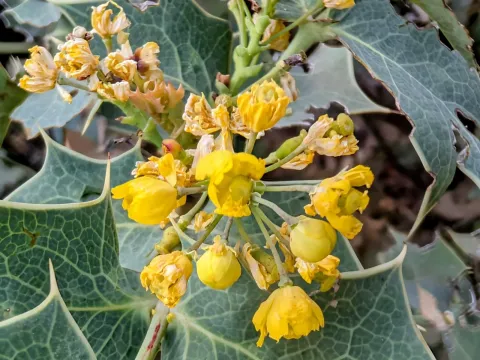
Berberis dictyota
Berberis dictyota
Berberis dictyota, commonly known as the net-veined barberry, is an evergreen shrub belonging to the family Berberidaceae. It is native to the arid regions of southwestern North America, specifically California, where it thrives in challenging climatic conditions.
What the section contains
Berberis dictyota
The plant exhibits distinctive botanical traits, including thick, leathery leaves with a prominent reticulate venation pattern. This adaptation allows the shrub to withstand severe dry spells, functioning as a highly effective xeriscaping specimen in landscape architecture.
Regarding soil requirements, Berberis dictyota necessitates well-drained, porous media. It is exceptionally sensitive to waterlogged conditions, which promote root rot. Ideally, the soil should be rocky or sandy to mimic its natural environment in the foothills and mountains.
This species requires full sun exposure to maintain its compact growth habit and vibrant foliage health. While it is hardy in Mediterranean-type climates, it requires protection from severe frost or prolonged freezing temperatures that could damage young apical shoots.
Management techniques are minimal once the plant is established. It is a slow-growing shrub that requires little to no pruning unless it is being shaped for a formal hedge. Water consumption should be strictly limited to encourage deep root system development.
The primary pathogenic threat to Berberis dictyota is fungal infection, particularly powdery mildew, which can colonize the leaves when humidity levels are excessive. Ensuring adequate spacing between plants is essential to facilitate air movement.
Common pests include aphids and scale insects that feed on the sap of tender branches. Integrated pest management strategies, such as using horticultural oils or introducing beneficial predatory insects, are recommended for maintaining plant vigor without excessive chemical intervention.