
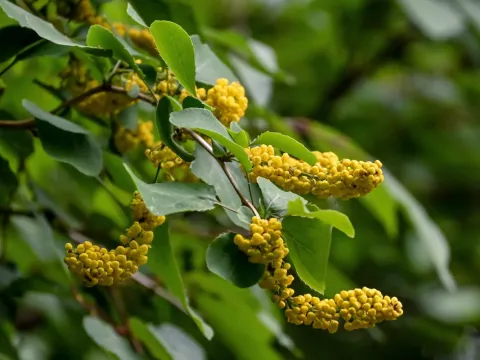
Berberis dasystachya
Berberis dasystachya
Berberis dasystachya, commonly known as the dense-flowered barberry, is a deciduous shrub belonging to the Berberidaceae family. It is native to the mountainous regions of China, where it has evolved to thrive in rocky, well-drained soils and temperate climatic conditions.
What the section contains
Berberis dasystachya
The plant is botanically distinguished by its stiff, spiny branches and distinct, long, dense racemes of yellow flowers. These inflorescences are its primary aesthetic feature, appearing late in the spring and attracting numerous pollinators to the garden.
Optimal growth requires full sun exposure to maintain the density of the foliage and ensure abundant flowering. While it is quite drought-tolerant once established, it prefers moderately fertile, well-draining loamy soils for long-term health and vigor.
Agronomic management involves periodic structural pruning, typically performed in late winter or early spring before the buds break. This practice encourages denser growth, which is particularly beneficial when the plant is used for security hedging.
Economically, this species is highly valued in horticulture for its resilience and ability to form impenetrable natural barriers. It provides both structural depth to landscape designs and ecological support for local bird populations due to its late-season berries.
The most significant pathological threats to Berberis dasystachya include rust diseases and powdery mildew. These fungal infections thrive in stagnant, humid environments where air circulation is restricted between dense foliage layers.
Among common insect pests, aphids are the most prevalent, often congregating on the undersides of leaves and on soft new shoots. Their feeding can lead to leaf curling, stunted growth, and the secretion of honeydew, which may attract secondary mold issues.
Proactive management of these threats starts with site selection and proper spacing. Ensuring that each shrub has enough room for air to pass through its canopy significantly lowers the risk of fungal outbreaks.
If an infestation occurs, manual removal of affected stems or leaves can often contain small populations of insects. For larger infestations, horticultural soaps or targeted insecticides are recommended to minimize damage while protecting beneficial pollinators.
Regular monitoring throughout the growing season is essential for early detection. Keeping the base of the plant free of debris and fallen leaves also prevents overwintering spores from re-infecting the shrub the following year.