
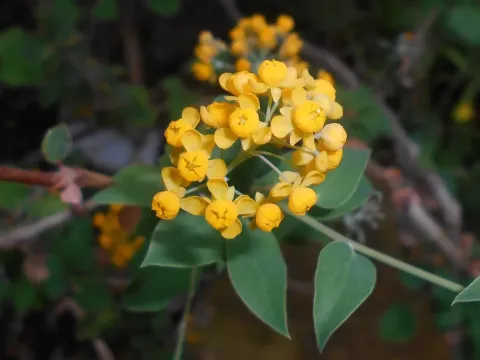
Berberis congestiflora
Berberis congestiflora
Berberis congestiflora is an evergreen shrub belonging to the Berberidaceae family. Originating from the mountainous regions of Chile, this species is noted for its compact, congested clusters of flowers and its unique foliage adaptation.
What the section contains
Berberis congestiflora
The plant thrives in well-draining, slightly acidic to neutral soils. It is essential to ensure that the planting site has excellent drainage, as the roots are sensitive to waterlogging and may develop rot in poorly aerated or compacted soil conditions.
Regarding climate, this species prefers cool to moderate temperatures and high light exposure. While it is hardy in its native range, in cultivation, it requires shelter from harsh, drying winds that can cause leaf desiccation during dormant periods.
Regular maintenance involves light pruning to preserve the natural shape and density of the shrub. Fertilization should be focused on the early spring growth phase, using balanced slow-release granular fertilizers to promote healthy stem elongation.
Soil management through organic mulching is highly recommended. Mulch serves to retain soil moisture during warmer months while also protecting the shallow root system from extreme temperature fluctuations, which is vital for the plant's long-term health.
Powdery mildew is a primary concern for Berberis congestiflora in humid environments. To prevent the spread of fungal spores, ensure adequate spacing between plants to maximize airflow, which naturally dries the foliage and reduces infection rates.
Rust diseases, characterized by orange pustules on the leaf surface, can affect vigor. If symptoms appear, removing the infected parts and applying protective copper-based fungicides is recommended to maintain the plant's aesthetic value.
Aphid infestations are common during the spring flush. These pests congregate on tender new growth, causing curling. Monitoring the plant tips and using insecticidal soaps can manage small populations before they cause structural damage.
Scale insects may also attach themselves to the woody stems. These are often difficult to spot, so careful examination of the bark during winter pruning is necessary to detect early signs of infestation and apply dormant oils.
To avoid common health issues, keep the base of the plant free of debris and fallen leaves. Maintaining a clean cultivation area reduces the overwintering habitat for pathogens and pests, contributing to a more resilient ornamental plant.