
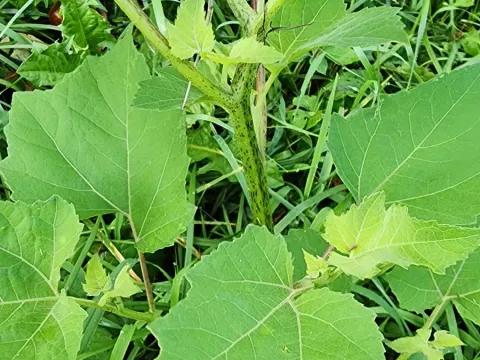
Xanthium chinense
Xanthium chinense
Xanthium chinense is an annual plant propagated primarily through seeds. Sowing is typically carried out in early spring once soil temperatures consistently exceed 12–15 degrees Celsius.
What the section contains
Xanthium chinense
The seeds often require a period of dormancy breaking or stratification to ensure uniform germination, especially when cultivated in temperate regions.
Optimal sowing depth ranges from 3 to 5 centimeters, depending on the texture and moisture content of the soil profile to prevent early desiccation.
Adequate spacing between plants is crucial to avoid overcrowding, which can hinder the development of the root system and reduce final crop productivity.
Under favorable conditions, seedlings emerge quickly and develop vigorous initial growth, allowing them to establish dominance in the crop field.
Belonging to the Asteraceae family, Xanthium chinense prefers sunny environments and thrives in nutrient-rich, well-draining loamy soils.
The crop is known for its high adaptability to varying climatic conditions, showing significant resilience to periods of limited water availability.
For industrial production, neutral to slightly acidic soil pH levels are preferred to maximize nutrient uptake and overall plant development.
While the plant is hardy, it requires consistent moisture during the initial growth phases to establish a robust framework for later biomass production.
Adequate exposure to direct sunlight is essential for photosynthesis, as the plant is a short-day species that initiates flowering based on light cycles.
The yield of biomass from Xanthium chinense is generally high due to its rapid growth rate and ability to produce substantial leaf and stem tissue.
Seed production is prolific, making the plant highly efficient in terms of reproductive output, which is a key metric for commercial seed cultivation.
The plant is highly valued for its secondary metabolites, including terpenoids and phenolic compounds, which are extracted for pharmaceutical use.
Strategic nitrogen fertilization can significantly enhance vegetative yield, though careful application is needed to maintain plant quality.
Economic yield is maximized when the harvest is timed precisely to match the peak concentration of active chemical ingredients within the plant tissues.
The crop faces pressure from fungal pathogens, particularly powdery mildew, which can thrive in humid conditions and reduce foliage quality.
Root-knot nematodes and other soil-borne pests can cause systemic issues, hindering plant growth and overall development during the season.
Insect pests such as weevils often target the developing fruit or seeds, necessitating regular monitoring throughout the reproductive growth stages.
- Powdery mildew
- Root rot
- Aphids
- Weevils
Integrated pest management, including crop rotation and the use of targeted biological controls, is essential for maintaining crop health.
Harvesting the aerial parts is typically performed at the onset of the flowering stage when the concentration of medicinal compounds is optimal.
Seeds are harvested once the burrs have matured, dried, and turned a dark brown color, usually following the conclusion of the growing season.
Post-harvest processing involves immediate drying in well-ventilated, shaded areas to prevent mold growth and maintain the integrity of the phytochemicals.
The use of specialized machinery is often required due to the spiny, hooked nature of the burs, which can complicate standard harvesting procedures.
Proper storage conditions, including cool, dry, and rodent-proof environments, are necessary to preserve the quality of the harvested botanical material.