
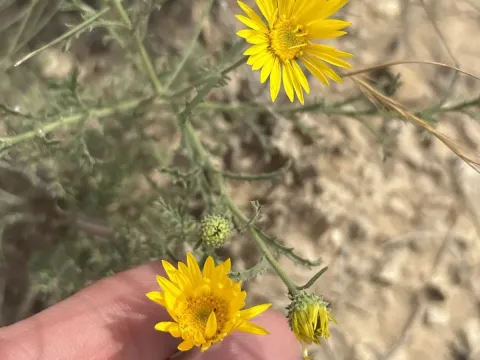
Xanthisma spinulosum
Xanthisma spinulosum
Xanthisma spinulosum, commonly known as spiny goldenweed, is a perennial flowering plant belonging to the Asteraceae family. It is native to the arid and semi-arid regions of North America, particularly flourishing in dry, rocky terrain and prairies.
What the section contains
Xanthisma spinulosum
The plant exhibits significant drought tolerance, making it an excellent candidate for xeriscaping and low-maintenance landscapes. It thrives in well-drained, sandy, or rocky soil types where water accumulation is minimal during the winter months.
Botanically, it features pinnately divided leaves with spinulose margins, providing the plant with its distinct appearance. The bright yellow flower heads emerge from late summer through autumn, providing a critical late-season nectar source for pollinators.
Optimal growth conditions require full sun exposure. The plant does not perform well in shaded or damp locations, where it becomes susceptible to physiological stress and reduced vitality. Low nitrogen input is sufficient, as the species is adapted to nutrient-poor soils.
In agricultural and landscaping contexts, it is essential to ensure adequate spacing between plants to facilitate air circulation. Proper airflow significantly reduces the risk of foliar diseases, which are often the primary limiting factor in non-arid climates.
The most significant threat to Xanthisma spinulosum is root rot, typically caused by excessive soil moisture and poor drainage. Ensuring the substrate is free-draining is the primary method of preventing mortality in cultivated settings.
Pests such as aphids and spider mites may occasionally infest the foliage, particularly during extended dry spells or periods of extreme heat. These pests are more problematic in enclosed or protected environments compared to open, well-ventilated areas.
Fungal pathogens, including powdery mildew, can affect the plant when humidity levels remain persistently high. This is particularly problematic in coastal or humid continental climates where air movement is restricted around the base of the plant.
Weed competition poses a severe threat, especially during the seedling stage. Given that the plant has a relatively slow initial growth rate, mechanical weed control or the use of inorganic mulch is highly recommended to protect the root zone.
To maintain a healthy stand, it is advised to avoid overhead irrigation, which can wet the foliage and promote fungal spores. Drip irrigation or minimal manual watering targeting the base of the plant is considered the best practice for successful management.