
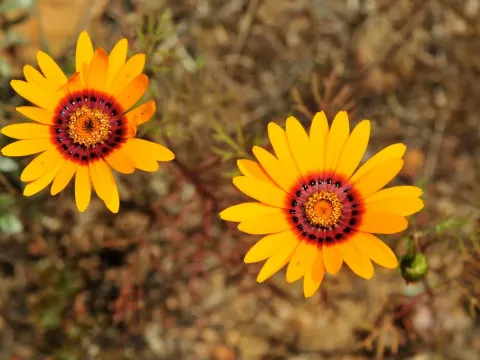
Ursinia calenduliflora
Ursinia calenduliflora
Sowing of Ursinia calenduliflora into open ground is carried out in spring once the risk of night frosts has passed, as the crop is sensitive to low temperatures.
What the section contains
Ursinia calenduliflora
To accelerate flowering, seedlings can be grown in containers during March or April using a light, nutrient-rich substrate.
When sowing, seeds should be lightly covered with soil, as they require exposure to sunlight for successful germination.
The optimal temperature for seed germination is between 18 and 20 degrees Celsius, with seedlings typically appearing within two weeks.
When transplanting seedlings to their permanent location, it is necessary to maintain a spacing of about 20–25 centimeters to ensure adequate air circulation.
Ursinia calenduliflora prefers open, fully sunlit areas, as the plant tends to become leggy and loses its flowering intensity when grown in shade.
The crop has moderate soil requirements but thrives best in light, well-drained sandy or loamy substrates.
The plant does not tolerate waterlogging in the root zone, making the creation of a high-quality drainage layer essential in heavy clay soils.
The species exhibits good drought resistance, yet it requires regular but moderate watering at the base during hot summer periods.
To maintain abundant flowering, it is recommended to apply periodic fertilizing with complex mineral fertilizers containing low nitrogen levels.
The primary threat to Ursinia is excessive soil moisture, which often triggers the development of root and basal rot.
In cases of dense planting and poor air ventilation, the plant may become susceptible to powdery mildew, requiring immediate treatment with fungicides.
Among pests, the crop is most frequently attacked by aphids, which feed on the sap of young shoots and buds, causing flower deformation.
During hot and dry spells, spider mites may infest the leaves, characterized by the appearance of fine webbing and yellow spots.
Disease prevention relies on maintaining a proper watering schedule, timely weeding, and regular inspection of plants for pest presence.