
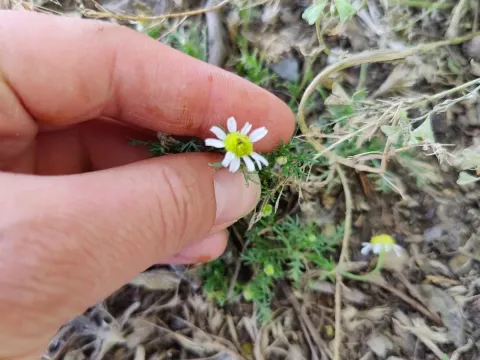
Tzvelev's Chamomile
Matricaria tzvelevii
Tzvelev's Chamomile (Matricaria tzvelevii) is a distinct member of the Asteraceae family that requires specific environmental conditions for optimal growth.
What the section contains
Tzvelev's Chamomile
Sowing is typically performed in early spring, ensuring the soil temperature is sufficient to support seed germination and root development.
Due to the small size of the seeds, they should be sown shallowly, often using a precision seeder to ensure uniform density across the field.
Regular monitoring of moisture levels after sowing is essential to prevent the topsoil from drying out before the seeds have successfully sprouted.
Proper field preparation, including light harrowing, helps create a seedbed that encourages rapid emergence and early vigor of the crop.
This crop thrives in open, sunny locations where it can access full sunlight, which is critical for biomass production and flowering.
Well-drained, sandy-loam soils are ideal for this species, as they provide the necessary aeration and prevent water stagnation at the root level.
Tzvelev's Chamomile is well-adapted to drier conditions, making it a resilient choice for areas where water efficiency is a significant concern.
The crop prefers neutral soil conditions and responds well to minimal but targeted fertilizer applications during the early vegetative stages.
Air circulation within the planting rows is vital to reduce humidity levels and maintain a healthy microclimate for the growing plants.
The primary threats include fungal diseases such as powdery mildew, which can significantly damage the foliage if conditions become overly humid.
Root rot remains a concern if the fields are poorly drained or if there is excessive rainfall during the vegetative stage of the chamomile.
Insects like aphids and mites are common pests that may feed on the plant sap, necessitating integrated pest management strategies.
Farmers are advised to use crop rotation to break the life cycles of soil-borne pathogens that might otherwise affect the chamomile beds.
Timely identification of pest infestations allows for targeted control measures that minimize chemical usage and protect the environment.