
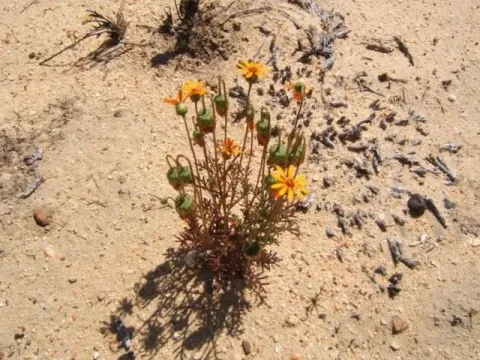
Ursinia abrotanifolia
Ursinia abrotanifolia
Sowing of Ursinia abrotanifolia is typically performed in the spring, after all danger of frost has passed and soil temperatures have reached a stable, warm level.
What the section contains
Ursinia abrotanifolia
Direct sowing in the garden is best in late April or May. For gardeners in cooler regions, starting seeds indoors in March using trays is recommended to ensure strong plant establishment.
The seeds have a good germination rate but require light to sprout successfully. Therefore, they should be sown on the surface of the soil or covered with only a very thin layer of substrate.
Seedlings should be thinned or transplanted when they reach the two-leaf stage. Careful handling of the roots is necessary because the plant is sensitive to transplant shock during early development.
Spacing should be maintained at about 25–30 centimeters between individual plants to promote air circulation and prevent fungal issues that can arise in overcrowded flowerbeds.
Ursinia abrotanifolia is a member of the Asteraceae family, native to South Africa, which dictates its specific climatic preferences and growth habits.
Full sun exposure is mandatory for this species. Without direct light, the plant becomes leggy, and its characteristic yellow flowers will fail to open properly during the day.
The ideal soil for Ursinia is light, well-draining, and slightly acidic or neutral. Soils that are heavy, clay-based, or prone to waterlogging will cause root damage.
The plant is considered moderately drought-tolerant once established. However, regular monitoring of soil moisture is required during extreme summer heat to prevent wilting.
Minimal fertilization is required; high nutrient levels, especially nitrogen, tend to produce excessive foliage at the expense of floral production and aesthetic quality.
This species is generally resilient to many common pests, though overly moist conditions can make it susceptible to powdery mildew, which affects foliage health.
Slugs and snails are the most significant threats to young seedlings in damp, cool springs. Physical barriers or organic molluscicides are often used to control these pests.
In hot, dry environments, spider mites can infest the plant. Regular checks for fine webbing on the underside of leaves can help identify and treat the issue early.
Root rot is the most common physiological threat caused by poor drainage or excessive watering, leading to sudden plant collapse without visible external injury.
Providing optimal spacing and avoiding overhead irrigation can significantly reduce the risk of both pest infestations and fungal pathogen development in the garden.