
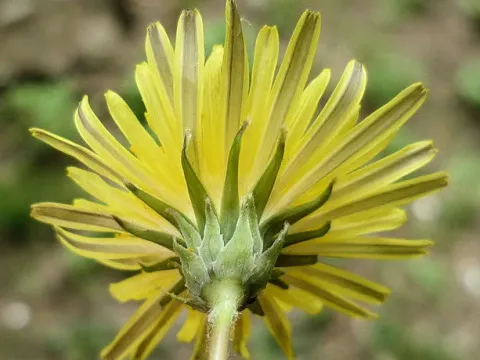
Ussuri dandelion
Taraxacum ussuriense
The Ussuri dandelion (Taraxacum ussuriense) is a perennial herbaceous plant belonging to the Asteraceae family, valued for its biological properties.
What the section contains
Ussuri dandelion
Cultivation starts with sowing seeds in early spring as soon as the soil warms up, or alternatively, in late autumn for natural vernalization.
Seeds are sown at a shallow depth of approximately 0.5 to 1 cm, ensuring they are covered with light soil to promote consistent germination rates.
Maintaining a row spacing of 30–45 cm is crucial, as this provides enough space for the developing root system and allows for efficient weed control.
Establishment of the crop usually takes a few weeks, and care should be taken to keep the seedbed moist until the seedlings are firmly rooted.
Ussuri dandelion thrives in sunny locations with well-drained, fertile sandy loam or loamy soils that possess a neutral pH level for optimal growth.
The plant is highly frost-resistant, making it well-suited for cultivation in temperate climates with cold winters and distinct seasonal temperature changes.
Proper soil aeration is essential to prevent root rot, especially during periods of heavy spring rainfall or when snow begins to melt in the fields.
Fertilizer programs should focus on phosphorus and potassium levels, which are critical for the healthy development of the taproot and nutrient storage.
Consistent moisture is required during the first year of growth to ensure the plants develop a robust root system capable of high medicinal yields.
The economic yield of the Ussuri dandelion depends largely on proper crop management and the harvest of the roots in their second year of growth.
Under optimal conditions, farmers can expect a significant harvest of dried roots per hectare, which are in high demand in the pharmaceutical industry.
Leaf mass can also be harvested throughout the season, providing an additional source of plant-based materials for various industrial applications.
Yield stability is improved by regular weeding and inter-row cultivation, which reduce nutrient competition and improve soil structure for root expansion.
The concentration of bioactive compounds is at its peak when the plant is harvested at the right phenological stage, typically at the end of the season.
The crop is occasionally susceptible to fungal diseases such as powdery mildew and grey mold, particularly if plant density is too high or humidity is excessive.
Pests like aphids and spider mites can attack the leaves, especially during dry spells, which may necessitate careful monitoring and biological control methods.
Effective disease management involves rotating crops and ensuring that fields are kept clean of weeds that could serve as alternative hosts for pathogens.
Proper field hygiene and avoiding overhead irrigation during humid weather are effective ways to mitigate the risk of fungal outbreaks in dandelion fields.
Early identification of infected plants allows for timely removal, which helps to contain local infestations and protects the integrity of the entire crop.
The root harvest is typically carried out in late autumn when the plant's aerial parts begin to senesce and nutrients are sequestered in the root system.
Mechanized equipment such as potato diggers can be used to extract the roots efficiently, minimizing damage and ensuring a clean harvest output.
Once harvested, roots must be washed thoroughly to remove soil particles and cut into smaller segments to ensure consistent and fast drying times.
Drying should take place in climate-controlled facilities at temperatures not exceeding 60 degrees Celsius to preserve the vital chemical constituents.
The final product should be stored in ventilated paper bags in a dry warehouse to prevent contamination, mold growth, and moisture absorption.