
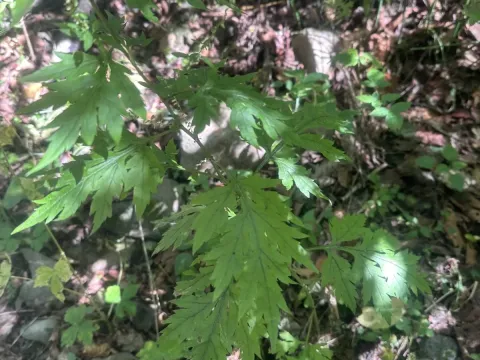
Ussuri wormwood
Artemisia sylvatica
Ussuri wormwood (Artemisia sylvatica) is a perennial herb belonging to the Asteraceae family. It is native to the temperate regions of the Far East, where it grows in wild habitats and is increasingly cultivated for its medicinal properties.
What the section contains
Ussuri wormwood
The planting process begins in early spring, once the soil has warmed up sufficiently. Seeds should be sown at a shallow depth of approximately 1-2 cm, as they require light for germination and are quite small in size.
For large-scale cultivation, maintaining a row spacing of 45-60 cm is recommended. This spacing ensures optimal airflow and provides enough space for the plant's root system to develop fully without intense competition.
Germination typically occurs within two to three weeks under favorable moisture conditions. Once the seedlings emerge, weed control becomes the primary task to ensure that the young plants are not smothered by invasive species.
Vegetative propagation through division is also a viable method for established plants. Dividing the rootstock in autumn allows for more vigorous growth in the following season and helps maintain the purity of the specific plant strain.
This crop thrives in sunny locations. Exposure to full sunlight is critical for the development of essential oils and other active compounds within the foliage, which determine the quality of the raw material.
The plant prefers light, well-drained soils, such as sandy loams or silty textures. Heavy clay soils that retain excess moisture can lead to root rot, which is a major concern for the plant's health during the winter months.
Ussuri wormwood is remarkably cold-hardy, reflecting its origin in the harsh climates of East Asia. It can easily withstand sub-zero winter temperatures, provided that the soil is not waterlogged.
While mature plants are drought-tolerant due to their deep root systems, supplemental irrigation during the peak growing season is advised for higher biomass production. Consistency in watering prevents environmental stress.
The soil should have a near-neutral pH level. If the soil is too acidic, applying lime is a standard practice to improve nutrient uptake and overall plant vigor throughout the vegetation cycle.
Common diseases affecting Ussuri wormwood include powdery mildew and rust. These fungal issues are most prevalent in humid, crowded plantings where air circulation is restricted, necessitating prompt removal of infected leaves.
Pests such as aphids and spider mites frequently target the plant's tender growth during the early summer months. They can cause leaf curling and reduce the plant's ability to produce necessary chemical components.
Root rot, often caused by poor soil drainage, can be fatal. Ensuring that the planting site has a slight slope or improved substrate composition significantly mitigates this risk during the rainy season.
Slugs and snails may attack seedlings, requiring either physical barriers or organic pest management strategies to protect the young crop until it is robust enough to withstand minor damage.
Integrated Pest Management (IPM) is strongly recommended to preserve the organic standards of the herb. Monitoring for early signs of infestation allows for localized treatment rather than broad chemical application.
Harvesting should be conducted at the height of the flowering stage. At this point, the concentration of active medicinal compounds and essential oils in the aerial parts is at its peak.
Plants are harvested by cutting the stems about 10-15 cm above the soil surface. Using sharp, clean tools prevents damage to the crown of the plant, allowing it to regenerate for future harvest cycles.
Post-harvest processing involves immediate transfer to drying facilities. Drying must occur in a dark, well-ventilated area with temperatures kept under 45 degrees Celsius to prevent the degradation of volatiles.
Once dried to the desired moisture level, the herb should be cleaned of any impurities or woody stems. Storage must take place in airtight, cool containers to maintain potency and shelf life over extended periods.
The final product is widely used in the pharmaceutical industry for its antiseptic and anti-inflammatory properties, and it remains a traditional choice for aromatic extracts and natural beauty products.