
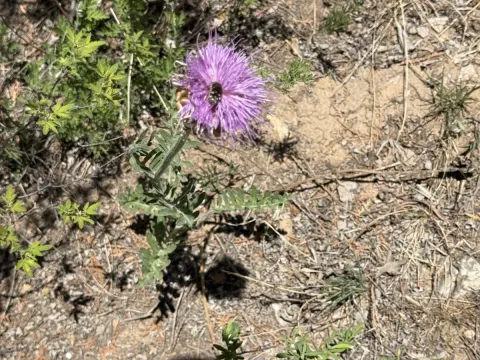
Russian knapweed
Acroptilon
Russian knapweed (Acroptilon repens) is a member of the Asteraceae family. It is a persistent perennial herb known globally as a significant invasive and noxious weed in agricultural settings.
What the section contains

Russian knapweed
The plant is characterized by an extensive and deep root system that can extend up to 10 meters deep, allowing it to survive harsh drought conditions and effectively outcompete crops.
It thrives in a variety of climates, particularly in arid and semi-arid regions. It prefers open, sunlit areas and is capable of colonizing various soil types, ranging from fertile loams to saline soils.
Its natural range encompasses temperate regions of Eurasia. Once established, it forms dense monocultures, effectively excluding other plant life from the area and creating challenges for land management.
Management requires long-term integrated efforts. Cultural practices such as planting competitive perennial grasses, alongside chemical control with systemic herbicides, are necessary to manage its spread.
The economic impact of Russian knapweed is purely detrimental; it is considered a major threat to crop productivity in wheat, corn, and pastures, leading to significant yield losses.
The plant exhibits allelopathy, releasing chemicals from its roots that inhibit the growth and seed germination of neighboring plants, effectively sterilizing the soil for other species.
While various fungal pathogens, such as rusts and powdery mildew, can infect the plant, they rarely cause enough damage to suppress its aggressive growth or reduce its root population.
Insects that feed on the weed, including specific gall midges and moths, do not provide sufficient biological control to limit the plant's spread or density in agricultural fields.
The greatest threat is the plant's ability to regenerate from small root fragments. Disturbance of the soil without proper follow-up leads to rapid re-colonization, making it difficult to eradicate.