
Safflower
Carthamus nitidus
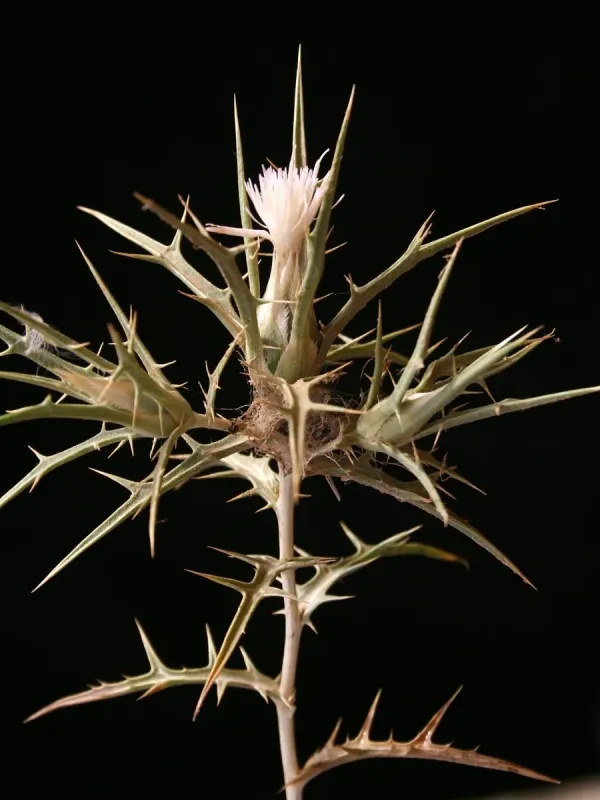
Description
Sowing dates
Safflower (Carthamus nitidus) belongs to the Asteraceae family. It is a highly resilient annual crop that is typically sown in early spring as soon as the soil warms up to 5–7 degrees Celsius.
The optimal sowing time aligns with the initiation of field operations for other spring crops. Early planting allows the plants to utilize winter-accumulated moisture for deep root system development.
Standard row sowing is employed with intervals of 15–20 cm. Planting depth usually ranges from 3 to 5 cm depending on soil moisture levels and soil structure at the time of sowing.
It is crucial to avoid excessive soil compaction during the sowing process as the crop is sensitive to soil crusting during germination. Pre-emergence harrowing is recommended to facilitate seedling emergence if crusting occurs.
To ensure optimal yield, a final plant population of 150,000 to 200,000 plants per hectare should be targeted to allow for proper branching and head development.
Growing requirements
This crop is known for its low maintenance requirements; it performs best in well-aerated chernozem or chestnut soils. It also exhibits superior tolerance to soil salinity compared to many other oilseeds.
As a xerophyte, safflower demonstrates exceptional drought resistance, making it an ideal choice for arid regions where traditional oilseed crops might fail to yield consistently.
The crop prefers moderate temperatures but seedlings are capable of tolerating mild frosts down to -5 degrees Celsius. It thrives in conditions with high solar radiation and long daylight hours.
Mineral nutrition is vital for productivity, specifically the application of phosphorus and potassium fertilizers, which enhance seed maturation and oil content within the kernels.
In crop rotation, safflower is ideally placed after winter cereals or legumes. It is strictly advised to avoid planting after sunflower to prevent the buildup of common soil-borne pathogens.
Yield
The yield of safflower depends heavily on agrometeorological conditions, particularly rainfall during the critical vegetative and flowering stages. Average yields typically range from 1.0 to 2.0 tons per hectare.
The primary economic use is the extraction of oil, which features a high concentration of linoleic acid. This oil is highly valued in both the food industry and for technical paint applications.
By-products of processing, such as meal, offer high nutritional value for livestock. Being rich in protein, this meal is a sought-after component in balanced animal feed rations.
The flower petals contain unique natural pigments like carthamin, which are utilized in both the textile industry for dyeing and in the food industry as a natural colorant.
Modern breeding varieties achieve an oil content of 35–40%, ensuring high economic profitability for farmers operating in drought-prone steppe regions around the globe.
Main diseases and pests
The most significant pests affecting safflower are the safflower fly, aphids, and cutworms. Effective control relies on maintaining spatial isolation from other Asteraceae crops to limit pest spread.
Common diseases include Fusarium wilt, Septoria leaf spot, and rust. Excessive humidity during the maturation period can lead to head rot, which significantly reduces the quality of the harvested seed.
A robust plant protection strategy is based on seed treatment and the use of fungicides during early growth stages. Chemical applications must be strictly avoided once flowering begins to protect pollinators.
Prevention involves high-quality soil preparation, the eradication of weed reservoirs, and adherence to sound crop rotation practices. Clean fields suffer significantly fewer pest and disease outbreaks.
Regular monitoring of the crop canopy allows for early detection of infection spots. Timely interventions are necessary to preserve yield potential and ensure high-quality agricultural output.
Harvesting
Harvesting is conducted via direct combining when seed moisture levels drop to 10–12%. Delaying the harvest can result in substantial losses due to seed shattering from the heads.
The optimal harvest window is at full maturity when the heads turn a characteristic brown color. The combine's threshing unit must be carefully calibrated to prevent mechanical damage to the seeds.
Post-harvest processing involves cleaning the seeds using grain separators to remove plant debris. Seeds must be dried to a moisture content below 9% for safe, long-term storage.
Storage should take place in dry, clean, and well-ventilated facilities. Proper storage conditions maintain seed quality and oil chemical stability over extended periods.
Optimizing combine settings during the harvest process minimizes seed loss, significantly boosting the overall economic viability of safflower cultivation for the farming enterprise.