
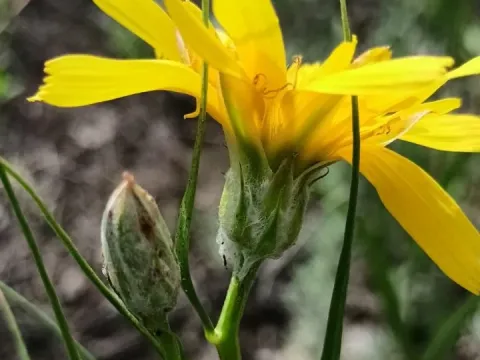
Scorzonera ensifolia
Scorzonera ensifolia
Scorzonera ensifolia belongs to the Asteraceae family and is an herbaceous perennial plant adapted to specific steppe and meadow environments. Sowing should be carried out in early spring, as soon as the soil is workable and temperatures rise above 5 degrees Celsius.
What the section contains
Scorzonera ensifolia
Seeds are sown at a depth of 2-3 centimeters in rows spaced 30 to 45 centimeters apart to allow sufficient space for root system development.
It is crucial to prepare a fine tilth in the seedbed to ensure uniform germination and to prevent the crusting of the soil surface after irrigation.
After reaching the stage of several true leaves, thinning is performed to maintain an optimal distance of 15-20 centimeters between individual plants.
Proper density is vital, as excessive competition between plants significantly limits the diameter and quality of the harvested root crops.
The crop thrives in sunny locations with well-drained, fertile soil, as shade exposure leads to stunted development and poor nutritional content.
Ideal soil types are deep, loose loams or sandy loams that allow the fleshy taproots to grow straight and deep without mechanical obstruction.
Scorzonera ensifolia is highly drought-tolerant, making it suitable for regions with limited rainfall, provided that the soil has sufficient water-holding capacity.
Maintaining a neutral soil pH is essential for optimal nutrient uptake; therefore, liming is recommended if the soil tests acidic during the preparation stage.
Good soil structure is more important than heavy fertilization, although moderate application of compost can improve yield in less fertile fields.
Soil-dwelling insects, including wireworms and white grubs, pose the most significant risk by damaging the main root and making the plant prone to decay.
Fungal diseases, specifically powdery mildew and root rot, often occur in plots with poor drainage or during seasons with prolonged high humidity.
Leaf-feeding insects may reduce the vegetative surface area, which slows down the plant's metabolism and results in smaller overall harvest yields.
To control threats, it is necessary to implement a strict crop rotation schedule, avoiding areas previously planted with other members of the Asteraceae family.
Regular monitoring for pests and the removal of infected debris are fundamental parts of integrated pest management for this specific agricultural crop.