
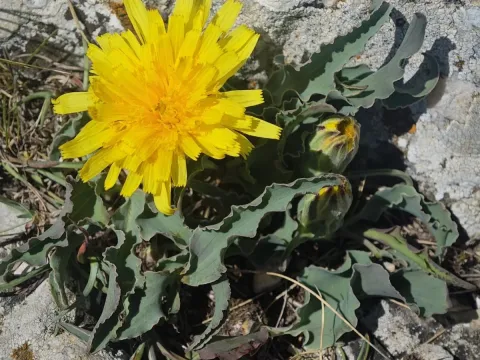
Scorzonera bupleurifolia
Scorzonera bupleurifolia
Sowing of Scorzonera bupleurifolia should be performed in early spring, once the soil has warmed to at least 5-8 degrees Celsius. Autumn sowing is also an option for earlier harvests, provided that the soil conditions remain stable throughout the winter months.
What the section contains
Scorzonera bupleurifolia
The optimal planting depth is between 1.5 and 3 centimeters depending on the soil texture, with shallower sowing recommended for heavier clays. Uniform planting depth is essential to ensure consistent germination and uniform stand establishment across the field.
A row spacing of 30 to 40 centimeters is recommended to allow adequate space for the development of the leaf rosette and for subsequent inter-row cultivation. This spacing reduces plant competition and facilitates mechanical weeding operations during the early stages of growth.
The seeding rate typically ranges from 8 to 10 grams per 10 square meters, depending on the germination rate of the seeds. Once the plants reach the two-to-three-leaf stage, thinning is necessary to maintain a final spacing of 10-15 centimeters between plants.
Firming the soil after sowing ensures good seed-to-soil contact, which is vital for efficient moisture uptake during the initial germination phase. This practice significantly increases field emergence and promotes strong early development of the root system.
Scorzonera bupleurifolia thrives in deep, well-cultivated, and fertile soils rich in organic matter. Sandy loams are ideal for this crop, as they allow for straight root development and prevent the root deformation often associated with heavy or compacted soils.
The plant is light-demanding and performs best in open, sunny fields. Exposure to full sunlight is critical for the accumulation of energy and nutrients in the taproot, directly impacting the quality and size of the harvested product.
While the crop is moderately drought-tolerant, consistent soil moisture during the first half of the growing season is crucial. Excessive moisture, especially in poorly drained soils, can lead to root rot and other fungal diseases, ruining the crop quality.
The ideal temperature for active growth ranges between 18 and 22 degrees Celsius. Although the crop is winter-hardy, it requires stable environmental conditions to avoid physiological stress, which can lead to bitter flavors or stunted root expansion.
Deep tillage to a depth of 25-30 centimeters is a prerequisite for successful cultivation. Removing stones and breaking up subsoil compaction is essential to ensure that the roots reach their full potential and maintain a high marketable grade.
Wireworms represent a significant threat to Scorzonera as they feed on the roots, causing extensive damage and lowering quality. Preventive measures include proper crop rotation and the elimination of weeds that serve as hosts for these pests.
Powdery mildew is a common fungal disease that affects the foliage during periods of high humidity and temperature fluctuations. Effective management includes ensuring proper plant density to maintain airflow and applying preventive fungicide treatments if necessary.
Grey mold may affect the roots, especially in wet conditions or during storage. Improving soil drainage and ensuring that plants are not overcrowded are key strategies to minimize the risk of rot spreading throughout the plantation.
Aphids can colonize the leaves, sucking sap and causing the leaf rosette to deform, which hinders overall plant development. Early detection through regular field scouting is essential to control aphid populations before they reach economic damage thresholds.
Sanitation practices, such as the removal of crop debris and maintaining clean fields, are highly effective in managing the pest pressure. Additionally, using disease-free seeds helps to establish a healthy crop from the very beginning of the season.
Harvesting begins when the roots reach technical maturity, usually 100 to 120 days after germination. The timing depends on the desired market size and the specific environmental conditions of the growing site.
The extraction process requires careful digging to avoid damaging the delicate root surface. Since mechanical injuries serve as entry points for pathogens, handling the roots with care is essential to ensure long-term storability and attractiveness.
Overwintering in the soil is a viable option for Scorzonera, as the crop is highly resistant to cold temperatures. Harvesting in early spring, just before the new foliage begins to emerge, provides an excellent and fresh-tasting product for early season markets.
After harvesting, the foliage is trimmed, leaving a short 1-2 centimeter stalk on the root. Proper cleaning without scrubbing the skin too harshly prevents moisture loss and helps maintain the quality of the roots during the post-harvest period.
For cold storage, the roots should be kept in a cool, dark environment with temperatures near 0-2 degrees Celsius and high humidity levels. Packing them in damp sand is a traditional and effective method to keep the roots crisp and marketable for months.