
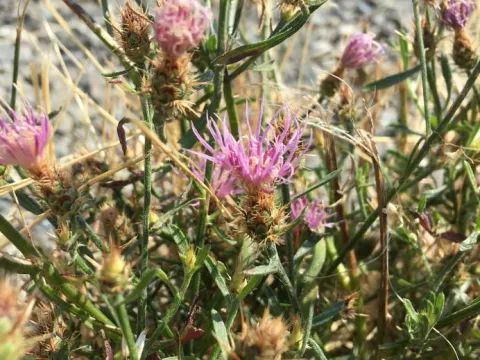
Varna knapweed
Centaurea varnensis
Varna knapweed (Centaurea varnensis) is a distinctive member of the Asteraceae family. Originating from coastal areas, it is botanically classified as a perennial herb, adapted to harsh saline and sandy environments.
What the section contains
Varna knapweed
The plant features pinnately divided leaves and typical thistle-like capitula. Its root system is deep and robust, allowing it to anchor securely in loose substrates and access moisture trapped in deeper soil layers.
Climate requirements for this species are centered around mild maritime conditions. It requires full sunlight to initiate flowering and maintain healthy leaf tissue, as its metabolism is optimized for high irradiance.
Soil management for Centaurea varnensis focuses on high aeration. It thrives in poor, sandy, or rocky soils that prevent water accumulation, which is essential to avoid physiological stress in the root zone.
In terms of agricultural maintenance, weed control is the most critical operation. Since the species is naturally slow-growing during the establishment phase, it must be protected from fast-growing invasive weeds.
The primary threats to the cultivation of Varna knapweed are fungal pathogens, specifically those causing root rot and damping-off, which are usually induced by poor drainage systems.
Insect pests, including aphids and leafhoppers, may infest the foliage during the spring growth cycle. These pests can transmit viral infections that weaken the overall vigor of the plant population.
To maintain plant health, it is recommended to monitor the leaf undersides regularly. Early detection of pests allows for localized treatments, minimizing the need for extensive chemical applications.
Environmental stressors such as extreme temperature fluctuations can weaken the plant, making it more susceptible to opportunistic pathogens that would otherwise not infect a healthy specimen.
Integrated pest management (IPM) strategies are highly recommended to ensure the long-term sustainability of the planting site, balancing biological control with careful environmental monitoring.