
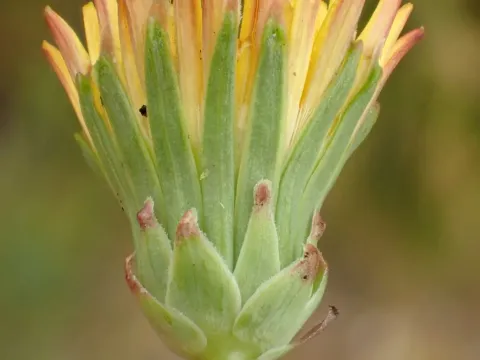
Oblique dandelion
Taraxacum obliquum
Oblique dandelion (Taraxacum obliquum) belongs to the Asteraceae family and is recognized as a perennial herbaceous plant with significant utility in herbal medicine and forage.
What the section contains
Oblique dandelion
The sowing process typically takes place in late autumn or early spring, as soon as the soil reaches a temperature of 5 to 7 degrees Celsius.
Given the small size of the seeds, they should be sown at a shallow depth of approximately 0.5 to 1 centimeter to ensure optimal emergence and contact with moist soil.
Row spacing of 30 to 45 centimeters is recommended to facilitate proper mechanical weeding and ensure sufficient airflow between plants during the growth cycle.
Success in establishment relies heavily on soil moisture, so keeping the topsoil moist during the initial germination phase is critical for achieving a uniform stand.
The plant thrives in open, sunny locations; any significant shading can negatively impact the synthesis of bioactive compounds within the roots and foliage.
While adaptable, oblique dandelion performs best in loose, fertile loam or sandy loam soils that possess a neutral or slightly alkaline pH balance.
The crop does not tolerate waterlogging, requiring well-drained fields to prevent root rot, especially during the spring snowmelt or rainy seasons.
It is a cold-hardy species, capable of overwintering successfully in diverse climates without the need for specialized protective measures or covering.
Application of balanced fertilizers, particularly those rich in phosphorus and potassium, encourages stronger root development and higher biomass yield.
The yield of oblique dandelion varies based on planting density and the age of the plantation, with the second year typically producing the most robust harvest.
Farmers can expect a yield of 1.5 to 2.5 tonnes of dried root material per hectare under intensive cultivation conditions and proper site management.
Leaves can be harvested periodically throughout the growing season, providing additional income streams without the need to sacrifice the main root crop.
Regular maintenance, including weeding and soil aeration, is essential to maximize the growth rate and ensure the quality of the harvested raw material.
Proper density management is crucial to avoid overcrowding, which can lead to thinner, less developed roots that do not meet standard quality requirements.
Common threats to the crop include fungal infections like powdery mildew, which thrive in humid, poorly ventilated field conditions.
Pests such as aphids and spider mites can severely compromise leaf integrity, directly reducing the plant's photosynthetic capacity and overall vigor.
Weed competition is particularly detrimental in the first few weeks of growth, necessitating early manual or mechanical intervention to protect young seedlings.
Biopesticides are preferred for disease management, as chemical residues must be avoided in the production of high-quality medicinal or herbal plant products.
Soil-dwelling larvae, such as wireworms, can damage root systems, highlighting the need for pre-planting soil testing and appropriate pest control strategies.
Root harvesting is best performed in the autumn when the plant begins dormancy, or early in the spring before the initiation of new vegetative growth.
The harvest is typically mechanized, utilizing modified potato harvesters to lift the roots from depths of 25 to 30 centimeters while minimizing mechanical damage.
Post-harvest cleaning is vital; roots must be washed thoroughly in cold running water to remove all soil particles and impurities prior to the drying process.
Drying should be conducted in shaded, well-ventilated areas or industrial dehydrators at temperatures not exceeding 50 degrees Celsius to preserve efficacy.
Quality storage involves keeping the dried product in cool, dry environments to prevent the degradation of essential oils and protect against storage pests.