
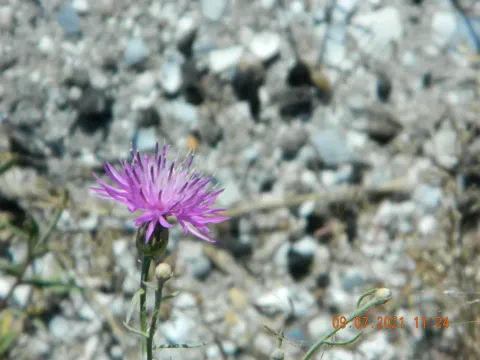
Odessan cornflower
Centaurea odessana
Odessan cornflower (Centaurea odessana) is a perennial herbaceous plant belonging to the Asteraceae family. It is recognized for its adaptation to arid and semi-arid steppe environments.
What the section contains
Odessan cornflower
The plant thrives in open, sunny locations with well-drained soil. It possesses a deep taproot system, which allows it to thrive in regions with low annual rainfall.
Suitable soil types for this species include fertile chernozems and loamy soils with a neutral pH. The species performs poorly in waterlogged soils where root aeration is restricted.
Odessan cornflower is characterized by excellent frost resistance and can easily survive harsh winter conditions. It is well-suited for temperate continental climate zones.
Agronomic management requires regular cultivation to suppress weeds and improve soil aeration. Proper maintenance of the soil structure is essential for the healthy development of the plant.
Fungal diseases, such as powdery mildew and rust, represent the primary threat to the health of the crop, especially when humidity levels are excessively high.
Pests including various aphids and weevils often target the buds and leaves. These pests can significantly reduce the potential yield and overall plant vigor if left unchecked.
Integrated pest management, involving a combination of cultural practices and biological control, is the most effective approach to mitigating these risks in the field.
Weed control during the early stages of establishment is vital, as the crop can struggle to compete with aggressive grasses and broadleaf weeds initially.
Field scouting and proactive monitoring are necessary to identify potential disease outbreaks or pest infestations before they reach economic damage thresholds.