
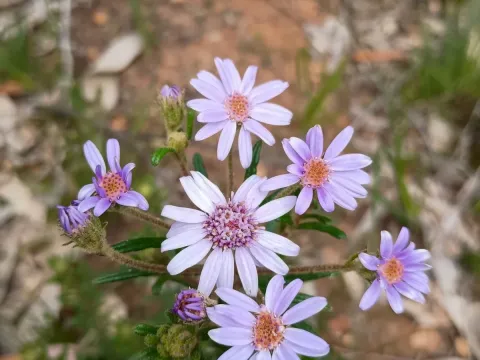
Olearia asterotricha
Olearia asterotricha
Olearia asterotricha is a hardy evergreen shrub belonging to the Asteraceae family. This species is native to the southeastern regions of Australia, where it thrives in rocky outcrops, forests, and shrublands, displaying significant environmental adaptation.
What the section contains
Olearia asterotricha
The plant demands well-draining soil to prevent root rot, which is a common issue in heavier clay-based substrates. It thrives in acidic to neutral soil types that are rich in organic matter but remain aerated throughout the growing season.
As a heliophilic plant, it requires full sun exposure to maintain its compact growth habit and produce an abundance of daisy-like flowers. While it is drought-tolerant once established, providing regular water during the first year is essential for root establishment.
The climatic preferences of this shrub include moderate temperatures and good air movement. While it can withstand light frosts, it is not suited for areas with prolonged, harsh winter freezing, where it should be grown in containers.
Pruning is a crucial aspect of the maintenance of Olearia asterotricha. It should be performed immediately after the flowering season to encourage bushier growth and prevent the shrub from becoming leggy or overgrown.
Common health issues in Olearia asterotricha are typically associated with water management. Overwatering or poor drainage often leads to fungal root diseases, which can be fatal to the plant if not addressed early.
Pests such as aphids and spider mites are frequent visitors, especially during periods of dry, hot weather. These insects target the tender growth and undersides of leaves, resulting in stunted development.
To mitigate the risk of disease, it is advised to provide adequate spacing between plants to ensure good airflow. Removing fallen debris from beneath the shrub also reduces the breeding ground for potential pathogens.
When pest infestations occur, organic remedies like neem oil or insecticidal soaps are generally effective. It is important to treat the entire plant thoroughly, paying attention to the areas where new growth emerges.
Regular visual inspections are recommended for early diagnosis. By identifying threats early in their progression, the gardener can manage the issue without resorting to aggressive chemical interventions.