
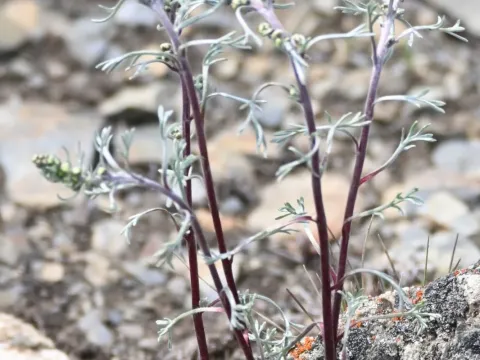
Northern wormwood
Artemisia borealis
Sowing Northern wormwood requires careful timing, as the seeds are small and sensitive to environmental conditions. Autumn sowing is often preferred because the seeds require a period of cold stratification to break dormancy successfully.
What the section contains
Northern wormwood
In spring, seeds should be sown as early as the soil becomes workable. It is essential to sow them near the surface, as burying them too deep will prevent the seedlings from reaching the surface due to their limited energy reserves.
Mixing seeds with fine sand before sowing helps achieve a uniform distribution across the field. This method is particularly effective for small-seeded crops, preventing the overcrowding that often occurs with mechanical seeders.
The recommended spacing between rows is between 45 and 60 centimeters. This distance provides adequate space for plant development and allows for the use of small-scale mechanical equipment to control weed growth during the early growth stages.
Compacting the soil lightly after sowing ensures good seed-to-soil contact. This contact is vital for the capillary rise of moisture to the seeds, which is necessary for uniform germination and establishment of the plantation.
Northern wormwood is naturally adapted to cold and temperate climates. It exhibits high frost tolerance, making it an excellent choice for regions where other aromatic crops might fail due to extreme winter temperatures.
The crop thrives in well-drained, sandy, or rocky soils. It is highly sensitive to waterlogged conditions, which can lead to root rot; therefore, selecting a site with natural drainage is critical for success.
Full sun exposure is a primary requirement for this species. When grown in shaded areas, the plant may become spindly, and the concentration of its characteristic aromatic oils will be significantly lower compared to plants grown in full sun.
The species prefers neutral to slightly alkaline soil pH levels. If the soil is highly acidic, liming should be performed well in advance of sowing to create a more favorable environment for root growth and nutrient uptake.
Moderate fertility is sufficient for this plant. Excessive fertilization, particularly with nitrogen, should be avoided as it stimulates excessive vegetative growth, which can lead to lodging and a decrease in the overall quality of the harvested essential oils.
Yield stability is usually achieved by the second year of cultivation. During the first year, the plant focuses its energy on root development, while the second and third years provide the most productive harvests.
An average dry matter yield ranges from 1.5 to 2.5 tons per hectare, depending on local environmental conditions and the intensity of the management practices applied to the specific field.
Maintaining a weed-free environment is the most important factor in ensuring high yields. Weeds compete for nitrogen and water, and in the case of Northern wormwood, they can also interfere with the necessary airflow around the base of the plant.
The plantation's lifespan can extend to several years, but productivity typically begins to decline after the fifth or sixth year. At this stage, it is advisable to rotate the crop to a different field to prevent soil-borne pathogen buildup.
Harvesting at the correct phenological stage is crucial for yield quality. If harvested too early, the biomass volume is low; if harvested too late, the plant may start dropping leaves, which significantly impacts the final weight of the harvested product.
Northern wormwood is generally robust and less prone to major pest infestations due to its bitter taste and essential oil content. However, like any agricultural crop, it is susceptible to specific problems under unfavorable conditions.
Powdery mildew can become a significant issue during periods of high humidity and poor air circulation. Proper plant spacing is the most effective preventative measure to ensure that the foliage dries quickly after rain.
Aphids can occasionally colonize the soft tips of new growth. Monitoring is essential during the early stages of the growing season, and if necessary, soft biological controls should be prioritized over harsh chemical interventions.
Root rot is the most common disease associated with over-irrigation or poor soil structure. Maintaining a rigorous drainage management plan is the primary way to mitigate the risk of losing segments of the plantation to decay.
Regular sanitation, including the removal of dead plant material at the end of the season, helps reduce the overwintering sites for potential pathogens, ensuring the health and longevity of the crop for the following year.
The optimal harvest time for Northern wormwood is during the full flowering stage. This is when the plant's essential oils are at their highest concentration, ensuring maximum value for the final harvested product.
Plants should be cut approximately 10 to 15 centimeters above the soil line. This height allows for sufficient leaf surface area to remain, enabling the plant to recover quickly after the harvest and survive the coming winter.
Drying must occur immediately after cutting to prevent fermentation. If the freshly cut biomass is left in piles for too long, the heat generated by the decomposing plant tissue will destroy the aromatic volatile compounds.
Drying should be done in a shaded, well-ventilated area. Rapid drying in direct sunlight is not recommended, as UV radiation can cause the degradation of important chemical compounds and alter the color of the herb.
Once dried to a moisture content of about 12 percent, the herb should be stored in clean, breathable containers. These containers should be kept in a cool, dark, and dry warehouse to maintain quality until the material is processed or sold.