
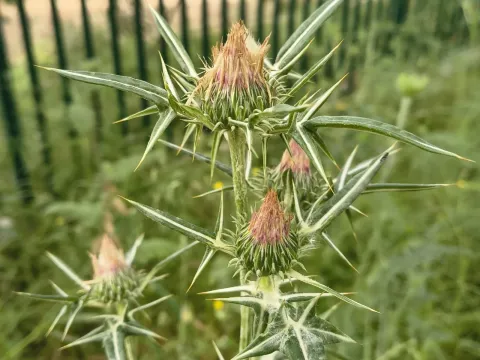
Notobasis
Notobasis
Notobasis, represented by the species Notobasis syriaca, is an annual plant belonging to the Asteraceae family. Seeds typically germinate during the autumn or spring seasons depending on the regional climate.
What the section contains

Notobasis
When cultivating for research purposes, sowing should be conducted when soil temperatures reach approximately 10 to 12 degrees Celsius to ensure uniform seedling emergence.
The seeds possess a high degree of dormancy, allowing them to persist in the soil seed bank for multiple years before favorable germination conditions occur.
Agronomic management often focuses on shallow seed placement, which facilitates quicker germination provided there is adequate surface soil moisture.
In field environments, pre-sowing tillage operations are effective in stimulating the germination of the seed bank, followed by mechanical or chemical control measures.
Notobasis thrives in full sun exposure and is highly sensitive to shading, which restricts its photosynthetic potential and overall biomass production.
The plant demonstrates significant plasticity regarding soil types, performing best in fertile loams and chernozem soils with neutral to slightly alkaline pH levels.
It exhibits moderate drought tolerance, which is a key physiological adaptation allowing it to inhabit arid and semi-arid environments successfully.
For optimal growth, the species requires balanced availability of macronutrients, particularly nitrogen, which supports the development of its characteristic stems.
Climatic requirements involve stable temperatures between 18 and 25 degrees Celsius, although the plant can withstand lower temperatures during its vegetative rosette stage.
Common threats to Notobasis health include fungal infections that manifest under conditions of high humidity or poor soil drainage, potentially leading to root rot.
Pests such as aphids and specialized coleopterans can cause damage to foliage and developing flower heads, although the plant's spines offer significant protection.
Management strategies often involve integrated pest and weed control, emphasizing crop rotation and the destruction of plants before the seed set phase.
Chemical control via herbicides is often required in agricultural settings where Notobasis competes with cereals for light, water, and soil nutrients.
Vigilance against the spread of potential host-pathogens is crucial, as the plant can act as a reservoir for certain diseases affecting broader Asteraceae crops.