
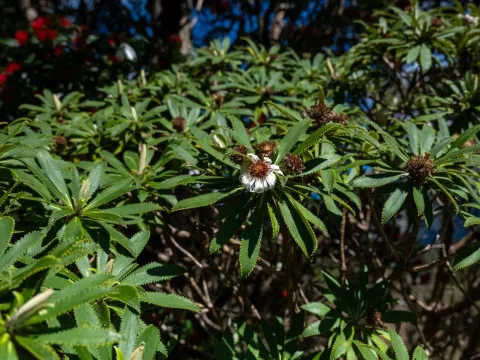
Olearia angustifolia
Olearia angustifolia
Olearia angustifolia is a robust evergreen shrub belonging to the Asteraceae family. Known for its distinct narrow leaves and resilience, this plant is native to New Zealand, where it thrives in coastal environments and exposed locations, displaying remarkable tolerance to harsh conditions.
What the section contains
Olearia angustifolia
The botanical characteristics of this shrub include a dense, branching habit and the ability to withstand salt-laden winds, which is a rare trait among many ornamental species. Its foliage remains lush throughout the year, providing significant aesthetic value even outside of the flowering season.
Cultivation requires well-drained, fertile soil that prevents waterlogging. Olearia angustifolia does not tolerate stagnant water around its roots; therefore, it is essential to ensure the planting site has excellent drainage, especially in areas with high annual rainfall.
Regarding climate, the plant prefers temperate conditions with mild winters and moderate humidity. While it can tolerate slight frost once established, it requires protection in colder climates to prevent damage to its delicate shoots and foliage during prolonged freezing weather.
In terms of agricultural and horticultural use, the plant is widely utilized in landscaping for coastal properties and as a structural element in gardens. It serves as an effective windbreak and can be shaped through selective pruning to maintain a tidy, ornamental appearance throughout the growing cycle.
The primary threats to Olearia angustifolia are fungal infections such as leaf spot and root rot, often triggered by excessive soil moisture and poor ventilation within the foliage. Managing moisture levels and ensuring proper spacing between plants are critical preventive measures.
Pests such as aphids and scale insects may occasionally infest the plant, particularly in sheltered or stressed conditions. Routine monitoring and the application of appropriate biological controls or insecticidal soaps can effectively manage pest populations and maintain plant vitality.