
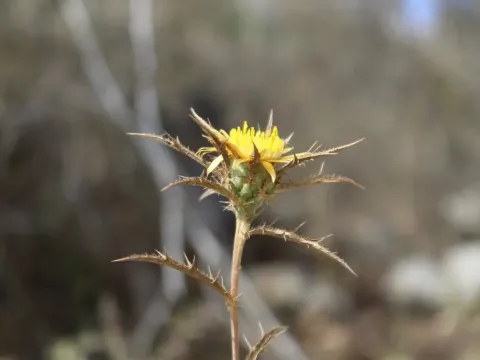
Stemless carline thistle
Carlina curetum
The stemless carline thistle is a hardy perennial herb that is primarily propagated by seeds. For successful germination, seeds require a period of cold stratification, making late autumn the ideal time for direct sowing in the field.
What the section contains
Stemless carline thistle
In agricultural practice, seeds should be sown in rows spaced 40 to 50 centimeters apart. If spring sowing is preferred, seeds must be chilled in a controlled environment for at least six weeks before being planted in the soil.
Sow seeds at a shallow depth of approximately 1 to 2 centimeters. Keeping the soil surface lightly moist is essential until germination occurs, as the young seedlings are delicate and susceptible to desiccation during the first few weeks.
Once seedlings have developed two sets of true leaves, they should be thinned to a distance of 30 centimeters. This spacing ensures adequate airflow, which is critical for reducing the risk of fungal infections later in the plant's development.
Transplanting seedlings grown in trays is a viable alternative to direct sowing. This method allows for better control over early growth stages and results in a more uniform stand when transplanted into the final growing site.
The plant thrives in full sun and requires an open, well-lit location to reach its full potential. It is highly intolerant of shade, which can lead to elongated, weak stems and poorly developed, non-vigorous rosettes.
Well-drained, lime-rich soil is essential for the health of Carlina acaulis. It performs best in rocky or sandy substrates, while heavy, clay-based soils should be amended with grit or sand to prevent stagnant moisture around the roots.
This species is exceptionally drought-tolerant once established, thanks to its deep taproot. Supplementary irrigation is generally only necessary during the first year of growth or during exceptionally dry summer periods.
Soil drainage is the most critical factor for overwintering. High moisture levels during the dormant season will inevitably lead to root rot and crown decay, which are the primary causes of mortality in commercial plantations.
Nutrient requirements are modest; an excess of nitrogen should be avoided as it encourages soft, succulent growth that is more prone to frost damage and pest infestation. A balanced, low-concentration fertilizer applied in early spring is sufficient.
The economic value of this crop is primarily derived from its roots, which are harvested for medicinal purposes, including their high inulin content. Roots are generally ready for harvest in the third or fourth year of growth.
Proper weed management and soil aeration significantly improve root size and overall yield. In well-maintained fields, yields of dried root material can be substantial, though it is usually grown in small, specialized batches.
The flower heads (capitula) are a secondary source of income, valued in the floral industry for dried arrangements. They can be harvested annually without harming the plant, provided the harvest is performed after the heads are fully matured.
The efficiency of the harvest is dictated by the plant's age and local climatic conditions. In regions with long growing seasons, the roots develop more biomass, resulting in a higher concentration of the active secondary metabolites.
Marketing the product as a niche medicinal herb can lead to premium pricing. Because the plant is hardy and requires little maintenance after the establishment year, it serves as a reliable, if modest, income source for small farms.
Fungal pathogens associated with high humidity represent the greatest risk to this crop. Root rot and collar rot are particularly destructive, often occurring when drainage is insufficient or during excessively rainy seasons.
Aphids and spider mites may occasionally infest the leaf rosettes, especially in hot, dry weather. Using botanical oils or soaps is usually sufficient to manage these pests without compromising the quality of the raw medicinal material.
Powdery mildew can appear on the foliage if air circulation is poor, particularly in dense plantings. Ensuring adequate spacing between plants is the most effective preventative measure against this common fungal issue.
Soil-borne insects, such as wireworms, can damage the taproot, creating entry points for secondary infections. Deep plowing and crop rotation are recommended practices to minimize the presence of these pests in the field.
Competition from fast-growing weeds is only a major threat during the plant's first year. Once the rosette is fully formed and the taproot is established, the plant becomes highly competitive and can suppress surrounding weeds.
Root harvesting is best performed in late autumn as the plant enters dormancy. This timing ensures that the concentration of inulin and other bioactive compounds in the roots is at its annual peak.
Mechanical harvesting using specialized lifters or forks is recommended to extract the long taproots without breakage. Prompt cleaning is necessary to remove soil and debris before the drying process begins.
Drying must be done in a climate-controlled environment at temperatures not exceeding 50 degrees Celsius. This prevents the degradation of essential oils and ensures the product maintains its color and chemical integrity.
Flower heads are gathered on a dry, sunny day when they are fully open and rigid. They should be hung in a cool, shaded, and well-ventilated area to dry slowly, which preserves their structural beauty for floristry.
Proper storage is vital to prevent moisture re-absorption and mold growth. The finished product should be kept in airtight containers in a cool, dark environment to maximize shelf life for up to two years.