
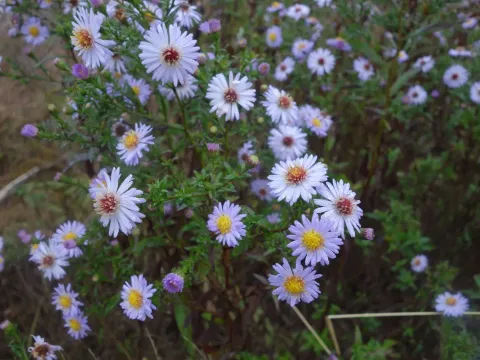
Symphyotrichum versicolor
Symphyotrichum versicolor
Sowing Symphyotrichum versicolor seeds is best achieved in early spring, once the danger of heavy frost has passed. Seeds should be sown in a well-draining seed starting mix and kept moist until germination occurs.
What the section contains
Symphyotrichum versicolor
For better results, cold stratification of seeds for several weeks can significantly improve germination rates. This mimics the natural winter conditions that the species typically experiences in its native range.
Seedlings are ready for transplantation into the garden when they develop at least two or three sets of true leaves. Proper hardening off before moving them outdoors is crucial for plant survival.
Division of mature clumps is an alternative method of propagation, usually performed in the fall or spring. This helps in controlling the plant's spread and keeps the foliage vibrant and healthy.
Spacing requirements vary based on the desired garden aesthetic, but generally, 50 centimeters between plants ensures adequate airflow, which is vital for preventing fungal issues.
Symphyotrichum versicolor, a member of the Asteraceae family, is a versatile perennial favored for its late-season blooms. It thrives in locations receiving full sun to light shade.
The ideal soil is loamy and fertile, with a neutral pH balance. Ensuring the soil has excellent drainage is paramount to prevent root rot, especially during wet autumn seasons.
Watering should be consistent throughout the growing season. While the plant is somewhat drought-tolerant once established, supplemental irrigation during heatwaves keeps the blossoms plentiful.
Maintenance involves cutting back the stems after the first hard frost to clear the area for winter. Applying a layer of organic mulch helps insulate the roots against extreme cold.
Supplemental feeding with a balanced granular fertilizer early in the spring supports vigorous growth. Avoid excessive nitrogen, which can lead to leggy plants prone to falling over.
Powdery mildew is the most significant disease affecting these asters, appearing as white patches on leaves. Improving air circulation around the plants is the most effective preventative measure.
Aphids can cause stress by colonizing the tender tips of the plant. A strong stream of water or the application of insecticidal soap is usually enough to manage minor infestations.
Rust fungi can occasionally develop during prolonged periods of high humidity. Removing affected foliage and cleaning up garden debris at the end of the season prevents recurrence.
Slugs and snails may attack young, tender foliage during wet springs. Using physical barriers like copper tape or diatomaceous earth can protect the young plants from damage.
Root rot, driven by poorly draining soil, remains a lethal threat. Ensuring the planting site is elevated or amended with sand helps maintain root health throughout the year.