
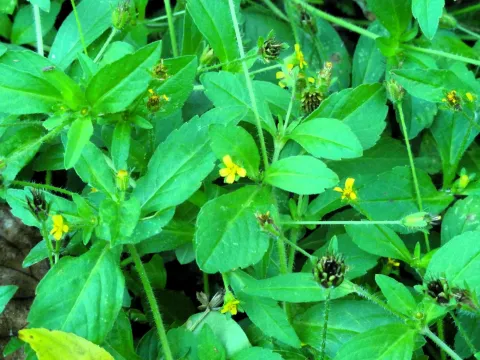
Synedrella
Synedrella
Synedrella (Synedrella nodiflora) is an annual herb belonging to the Asteraceae family. Often characterized as a weed, it possesses significant botanical interest due to its resilience and rapid growth in diverse tropical environments.
What the section contains

Synedrella
Originating in the tropical Americas, Synedrella has expanded its range globally. It is commonly found in disturbed soils, roadsides, and agricultural fields, demonstrating a high degree of phenotypic plasticity in various tropical ecosystems.
The plant thrives in warm, humid climates, typically requiring consistent temperatures and abundant sunlight to reach maturity. It does not tolerate frost, making it suitable only for tropical or subtropical regions without significant cold intervals.
Regarding soil requirements, Synedrella prefers well-drained, nutrient-rich soils but shows remarkable adaptability to various soil types, including slightly degraded land. Adequate soil moisture is crucial during the early stages of development to establish a robust root system.
Management techniques for Synedrella involve careful monitoring, as the plant reproduces readily through high seed dispersal. In agricultural setups where it is utilized as supplemental forage, periodic harvesting before seed maturation is recommended to control its spread.
Synedrella is susceptible to various fungal pathogens when cultivated in overcrowded conditions with high humidity levels. Effective disease management involves maintaining adequate spacing between individual plants to ensure proper air circulation.
Typical pests affecting this plant include aphids and leaf-eating beetles, which can significantly stunt growth during the vegetative phase. Integrated pest management strategies, such as physical removal or biological controls, are preferred over broad-spectrum pesticides.