
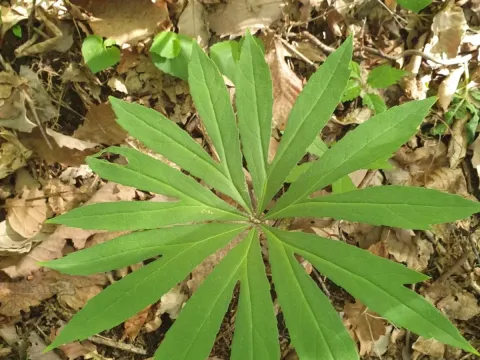
Syneilesis palmata
Syneilesis palmata
Syneilesis palmata, commonly known as the shred leaf plant, is a distinct perennial species belonging to the Asteraceae family. The plant is primarily valued in horticulture for its unique umbrella-like foliage and sculptural appearance in woodland garden settings.
What the section contains
Syneilesis palmata
Propagation is typically achieved through division of the rhizomes in early spring before the foliage fully unfolds. This method ensures that the new plant retains the characteristics of the parent and establishes itself more quickly during the growing season.
Seed propagation requires cold stratification, meaning seeds should be sown in autumn or kept in a cold environment for several weeks before spring germination. This process mimics the plant's natural environment and breaks seed dormancy.
When planting divisions, ensure the rhizomes are placed at a depth where the buds are just covered by soil. Proper spacing, ideally 40–50 centimeters apart, is essential to accommodate the plant's spread and ensure healthy root development.
Native to the forests of East Asia, including Japan and Korea, this plant has adapted to temperate forest conditions. In agricultural and horticultural practices, it is considered a specialized crop for shade-loving perennial collections.
Syneilesis palmata thrives in shaded or semi-shaded environments, avoiding direct sun which can easily scorch its thin leaves. Woodland settings, such as the north side of a garden or underneath deciduous trees, provide the best light conditions.
The soil must be rich in organic matter, loose, and consistently moist. Adding leaf mold, compost, or peat to the soil mixture improves water retention while ensuring the necessary drainage to prevent the rhizomes from rotting in stagnant water.
The ideal soil pH is slightly acidic to neutral, reflecting the natural forest floor conditions from which the plant originates. Regular moisture is the most critical factor; the soil should never be allowed to dry out completely during the growing season.
Mulching is a highly recommended agricultural practice to maintain consistent soil moisture and protect the root system from rapid temperature fluctuations. A layer of organic mulch also suppresses competitive weeds that could hinder the plant's growth.
While the plant is hardy in temperate climates, protection against extreme winter cold is advised in areas with severe frost. A layer of straw or fallen leaves over the dormant roots can serve as an effective thermal insulator until spring.
Slugs and snails pose the greatest threat to Syneilesis palmata, particularly in the spring when the foliage emerges from the ground. Protection measures like physical barriers or biological controls are essential to keep the leaves intact.
Fungal issues, such as root rot, may occur if the soil remains waterlogged for extended periods. Ensuring a well-drained substrate and avoiding overhead irrigation can significantly reduce the risk of these pathogens affecting the plant's health.
The plant is relatively resilient but can suffer from foliar spots if humidity levels are excessively high without adequate air circulation. Keeping the garden area clean and removing plant debris helps prevent the spread of fungal spores.
Competition from weeds is a significant concern during the early establishment phase. Regular but gentle weeding is required, taking care not to disturb the sensitive rhizomes that lie close to the surface of the soil.
Monitoring the plant for signs of stress, such as yellowing leaves or drooping stems, is important for early intervention. Proper nutrient management through light organic fertilizing can enhance the plant's natural resistance to environmental stress.