
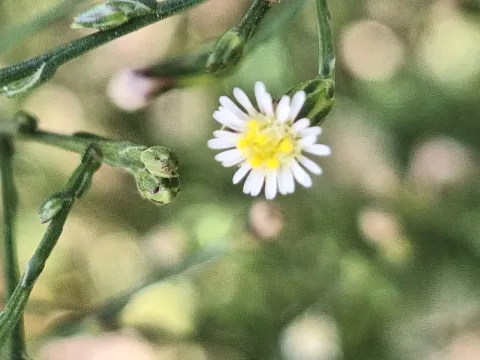
Symphyotrichum squamatum
Symphyotrichum squamatum
Symphyotrichum squamatum is not an agricultural crop but a highly invasive weed species. It reproduces primarily through wind-dispersed seeds, which can be carried over long distances.
What the section contains
Symphyotrichum squamatum
Seed germination typically occurs in early spring once soil temperatures reach adequate levels for activation. It exhibits a high rate of seedling survival in diverse environments.
The plant has a prolonged reproductive phase, allowing it to produce seeds throughout the summer and autumn months. This creates a persistent soil seed bank.
Agronomic management is often challenged by the weed's ability to germinate quickly after tillage operations or rainfall events, outpacing standard crop development.
Control strategies must focus on preventing the plant from reaching the flowering stage, as a single mature plant can produce an immense volume of viable seeds.
Belonging to the Asteraceae family, this species is native to South America. It has successfully invaded various parts of the world, adapting to new climates.
It thrives in open, sunny locations with minimal competition from other vegetation. It is commonly found on abandoned lands, roadsides, and disturbed fields.
The plant is highly adaptable to various soil types, including nutrient-poor or slightly saline soils, where it outcompetes native flora.
Climate adaptability is one of its strongest traits, as it flourishes in temperate to subtropical zones, provided there is enough moisture for early growth.
Effective agricultural practices, such as competitive crop density and timely mechanical weeding, are essential to minimize its presence in arable fields.
Symphyotrichum squamatum displays significant resistance to common plant diseases, maintaining vigor even in crowded or stressful conditions.
While some generalist insect pests may feed on its leaves, they rarely provide enough biological control to suppress the weed population effectively.
The primary threat is the direct competition with agricultural crops for nutrients, sunlight, and moisture, which causes significant economic loss in yield.
Herbicide efficacy varies, and there is evidence of reduced sensitivity to several broad-spectrum chemicals used in modern weed management systems.
To prevent spreading, farmers must prioritize cleaning harvesting machinery and monitoring field edges to curb the encroachment of this invasive plant.