
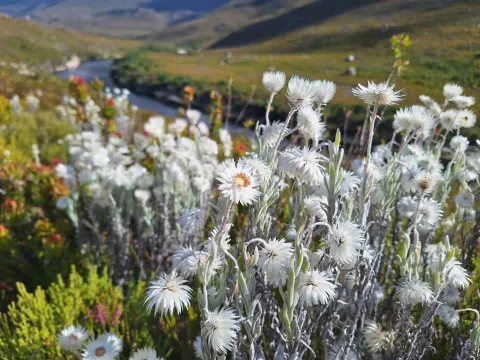
Syncarpha
Syncarpha
Syncarpha belongs to the Asteraceae family and is a genus of evergreen perennials native to South Africa. Propagation is primarily carried out via seeds, which require specific conditions to germinate successfully in early spring.
What the section contains


Syncarpha
The seeds should be surface-sown on a lightweight, well-draining seed-starting mix. Because they are tiny, they should not be covered deeply; a light dusting of sand or vermiculite is sufficient to hold them in place.
Consistent temperatures between 18 and 20 degrees Celsius are necessary for uniform germination. Maintaining high humidity without saturating the soil is key during the first stages of development.
Once the seedlings develop their first true leaves, they should be carefully pricked out and transplanted into individual pots to avoid root competition and ensure stronger growth.
Hardening off is crucial before moving the young plants to their permanent location in the garden, as sudden exposure to intense sun or cold winds can severely damage the foliage.
Syncarpha thrives in full sun exposure. It is a heliophilic plant, and any shade during the growing season will significantly reduce the number of blooms and overall plant vigor.
Soil requirements are strict: excellent drainage is mandatory. Sandy or rocky soils are ideal, as they mimic the plant's natural habitat and prevent the waterlogging that is fatal to its root system.
Watering should be balanced. While these plants are drought-tolerant once established, they need regular irrigation during the growing season, provided that the soil dries out between waterings.
In regions where temperatures drop below freezing, Syncarpha should be cultivated in containers. This allows gardeners to move the plants into a frost-free, cool greenhouse or conservatory during winter.
Fertilization should be applied sparingly. Excessive nitrogen causes weak, leggy growth that is susceptible to pests, whereas a balanced, low-nitrogen feed supports floral production.
Root rot is the most frequent cause of plant failure, typically triggered by heavy soils or excessive moisture retention. Ensuring a porous soil structure is the best preventative measure.
Powdery mildew may occur if air circulation is inadequate. Planting in open areas with good breeze and avoiding overhead watering helps to maintain a clean and healthy canopy.
Spider mites represent a significant threat in warm, arid conditions. They can quickly cause discoloration and drying of the foliage, necessitating the use of biological or chemical acaricides.
Aphids tend to cluster on the developing flower buds. Prompt intervention with mild insecticidal soaps is usually sufficient to manage these infestations without harming the plant.
Regular visual inspections of the plant stems and the undersides of the leaves are recommended to detect any pest activity before it becomes a widespread problem.
As a premiere everlasting flower, the timing of the harvest is critical. Flowers should be picked when they are fully open but before they begin to fade or show signs of aging.
Harvesting must occur during dry weather. Moisture on the petals at the time of cutting can lead to rot during the drying process, compromising the quality of the preserved product.
To dry Syncarpha, the stems should be gathered in loose bunches and hung upside down in a dark, airy location. Keeping them away from direct sunlight prevents the color from bleaching.
The drying process usually takes about two weeks, depending on ambient humidity. Once fully dried, the flowers retain their structural integrity and vibrant appearance for many months.
Properly dried Syncarpha is a highly valued component in professional floristry for creating long-lasting arrangements that require minimal maintenance.