
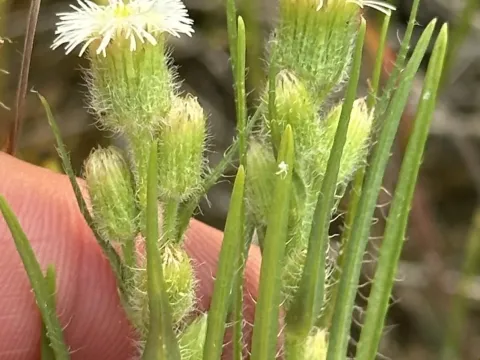
Spear-leaf fleabane
Erigeron lonchophyllus
Spear-leaf fleabane is a plant species that relies on efficient seed dispersal, with small seeds germinating rapidly once favorable soil temperatures are achieved in early spring.
What the section contains
Spear-leaf fleabane
In agricultural contexts, managing the timing of soil preparation is essential, as the species tends to exploit freshly disturbed soil surfaces for colonization.
Successful sowing requires precise shallow placement, ideally at a depth of less than 1 centimeter to ensure that light triggers the physiological processes of germination.
Farmers often observe high germination rates when the soil moisture is maintained at a consistent level, allowing the primary root to anchor quickly into the growing medium.
Proper field rolling after sowing is a recommended agronomic practice to improve the contact between the minute seeds and the soil particles, facilitating efficient moisture absorption.
As a member of the Asteraceae family, the species thrives in well-drained, sun-exposed environments that provide enough light for optimal photosynthetic activity.
The plant demonstrates significant environmental plasticity, being able to adapt to various soil types, provided they are not excessively compact or waterlogged.
Soil pH levels should ideally range from slightly acidic to neutral, as extreme chemical conditions can restrict nutrient uptake and stunt the plant's overall growth habit.
Climate requirements involve moderate temperature fluctuations during the growing season and a preference for regions with distinct, well-ventilated atmospheric conditions.
Adequate spacing is crucial to prevent resource competition among plants, ensuring each individual has sufficient access to soil minerals and atmospheric sunlight.
The crop faces several pathological risks, primarily fungal in origin, which are exacerbated by high relative humidity and poor air circulation within the canopy.
Pest populations can cause significant damage during the vegetative stage, particularly by feeding on succulent apical tissues and reducing the plant's vigor.
Effective integrated pest management is necessary to mitigate the risks posed by sucking insects and pathogens that target the Asteraceae family across various agricultural regions.
Field monitoring remains the best strategy for early detection of necrotic lesions on leaves and stems, which often signal the onset of serious fungal outbreaks.
- Powdery mildew (Erysiphaceae)
- Root rot (Fusarium)
- Aphids (Aphididae)
- Plant bugs (Miridae)