
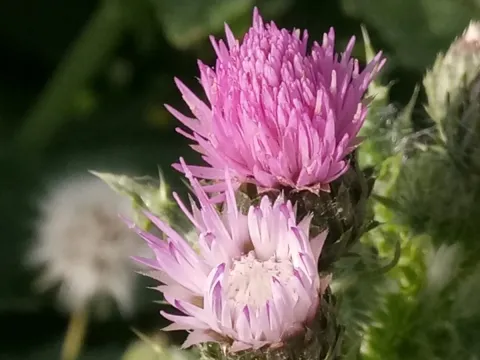
Spach's Thistle
Carduus spachianus
Spach's Thistle, scientifically known as Carduus spachianus, is a member of the Asteraceae family. This species is characterized by its biennial or perennial life cycle and is often recognized for its ecological role in diverse habitats.
What the section contains
Spach's Thistle
When cultivated, the plant requires careful seed selection to ensure purity. Sowing is typically performed in early spring once the soil temperature is sufficient to trigger germination across the prepared seedbed.
Spacing between rows should be adequate to accommodate the development of the basal rosette, which is the primary vegetative stage in the first year of growth. Mechanical weeding is possible if row spacing exceeds 40 centimeters.
Deep soil preparation before planting is essential to allow the plant's taproot system to penetrate lower soil layers. Proper seed depth ensures stability against wind and erosion during the early growth phase.
In terms of agricultural planning, the crop needs to be monitored for its potential spread, as some thistle species can become invasive if not managed within a controlled farming environment.
Spach's Thistle thrives in well-drained, sandy to loamy soils that receive plenty of direct sunlight. It is remarkably tolerant of rocky terrain and can adapt to various environmental conditions with minimal input.
The climate requirement is primarily focused on temperature tolerance; the plant is hardy and survives both cool springs and hot summers. However, it requires a dry period during seed maturation to prevent fungal degradation.
Soil pH levels should ideally fall within the neutral range. While the plant can survive in slightly alkaline or acidic soils, optimal vegetative growth is observed in well-balanced soil profiles.
Irrigation is rarely necessary once the plant is established, as its deep root system efficiently utilizes groundwater. Supplemental water should only be provided during extreme drought periods if vegetative biomass is the target.
Agrotechnical maintenance focuses on preventing competition from grasses and invasive annual weeds. Regular inter-row cultivation helps maintain soil aeration and promotes healthy physiological development.
Pest pressure on this species often includes aphids and specific coleopterans that feed on the soft tissues of the stem and leaves. Early detection is key to preventing significant damage to the floral heads.
Fungal pathogens such as powdery mildew can be a persistent problem, especially in regions with high nocturnal humidity. The disease manifests as white patches that impede the plant's ability to undergo efficient photosynthesis.
Root rot, driven by stagnant water, is a serious threat that can decimate entire patches of the crop. Ensuring proper drainage is the most effective preventative measure against soil-borne pathogens.
Strategic crop rotation is recommended to break the life cycle of specialized pests. Avoiding continuous monoculture is crucial for maintaining the long-term health of the field.
- Systemic monitoring of the plant canopy for pest clusters
- Proper sanitization of tools used during harvest
- Implementation of preventative fungicide treatments in damp seasons