
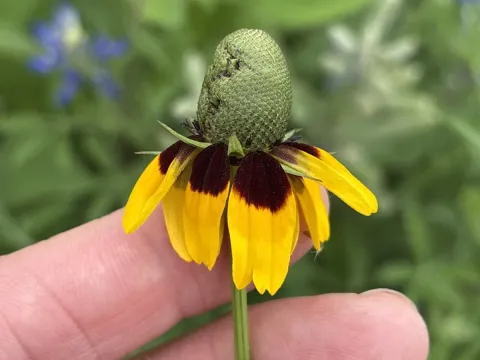
Clasping-leaf coneflower
Rudbeckia amplexicaulis
Rudbeckia amplexicaulis, commonly known as clasping-leaf coneflower, is an annual plant belonging to the Asteraceae family, valued for its unique yellow petals.
What the section contains
Clasping-leaf coneflower
Seeds should be sown in early spring once the threat of frost has passed, usually directly into prepared garden beds that receive full sunlight.
For indoor propagation, seeds can be started in trays about six to eight weeks before the last expected frost, ensuring they are only lightly covered with soil.
The germination process typically takes about two to three weeks if the soil temperature is maintained at a consistent level of 20 degrees Celsius.
Once the seedlings develop two or three sets of true leaves, they should be thinned or transplanted to a permanent location with a spacing of about 30 centimeters.
This species thrives in open areas with plenty of sunlight; shading will lead to weak stems and reduced flower production throughout the growing season.
The plant is adaptable to various soil types, but it prefers fertile, well-draining loam that can retain just enough moisture without becoming waterlogged.
While clasping-leaf coneflower is somewhat drought-tolerant, supplemental irrigation during extreme heatwaves will significantly improve its vigor and flowering display.
Adding a light layer of mulch around the base of the plant helps retain soil moisture and suppresses weed growth, which is essential for healthy development.
Minimal fertilization is required; however, a balanced liquid fertilizer applied once at the start of the budding phase can boost overall growth performance.
The most common disease affecting this plant is powdery mildew, which often occurs in late summer if air circulation is poor and humidity levels are high.
Pests like aphids and spider mites may target the tender leaves, and regular monitoring is necessary to keep their populations under control.
Cultural practices, such as proper spacing and cleaning up plant debris, are the most effective ways to prevent the spread of fungal pathogens in the garden.
In cases of severe infestation, using insecticidal soaps or organic horticultural oils can mitigate pest damage without harming beneficial pollinating insects.
Overwatering is a significant threat that leads to root rot, so ensuring proper drainage at the planting site is the best preventative strategy.
Seed harvesting should occur when the flower heads become brown and dry, indicating that the seeds have reached full maturity on the plant.
After cutting the flower heads, allow them to air-dry in a cool, shaded place for a few days to ensure the seeds are completely dehydrated for storage.
Storage should be handled using breathable containers, such as paper envelopes, to prevent moisture accumulation and preserve long-term seed viability.
For cut flower use, harvest the stems early in the morning when the flowers are starting to open to ensure maximum vase life for your arrangements.
End-of-season maintenance involves removing the spent stalks to tidy up the garden area and reduce the risk of pests overwintering in the soil surface.