
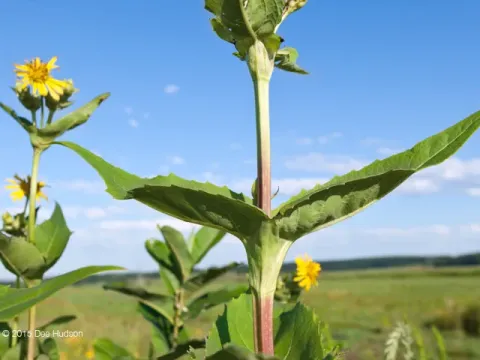
Cup plant
Silphium hybrids
The cup plant (Silphium perfoliatum) is a perennial herbaceous plant belonging to the Asteraceae family. Known for its adaptability, it is an increasingly popular crop for both forage and energy production.
What the section contains
Cup plant
Seed germination requires cold stratification at temperatures between 2–5 °C for approximately one month. This process is essential to overcome natural seed dormancy.
The ideal sowing time is early spring. Seeds should be placed at a depth of 1–2 cm in well-prepared, moist soil to ensure optimal seedling emergence.
A row spacing of 50–70 cm is recommended, allowing the plants sufficient space to develop their characteristic square stems and broad, cup-like foliage.
During the first year, growth is predominantly focused on the root system and basal rosette development, making effective weed control essential during this stage.
Cup plant is highly winter-hardy and can thrive in various climatic zones. It is remarkably resilient to adverse weather, including late spring frosts that might damage other crops.
It prefers deep, fertile, and moist soils. While it tolerates a wide range of soil textures, it shows the best growth performance in loamy soils with high organic matter content.
Its deep taproot system allows it to access water from deeper soil horizons, providing excellent drought tolerance once the plant is well-established.
The plant has a broad pH tolerance, thriving in neutral to slightly alkaline soils. It responds very positively to balanced fertilization, particularly in the first few years of production.
Once established, the cup plant can be productive for up to two decades, providing a long-term, stable source of biomass without the need for annual tillage.
The cup plant is a high-yielding crop, capable of producing 60–100 tons of green biomass per hectare annually, depending on management and soil quality.
As a forage crop, it is valued for its nutritional profile, providing high-quality silage that is well-digested by livestock, particularly in mixed rations.
In the energy sector, the cup plant is considered a top-tier crop for biogas production. Its methane yield per hectare often competes favorably with conventional silage maize.
Full production potential is typically realized from the third year onwards, as the root structure matures and the canopy becomes fully closed.
The crop produces excellent regrowth, often allowing for two harvests per season without compromising the health and longevity of the plant stand.
One of the cup plant's greatest advantages is its high level of resistance to most common agricultural pests and diseases, reducing the need for chemical inputs.
Poor drainage or waterlogged conditions can lead to root rot. Therefore, selecting well-drained field sites is crucial for maintaining a long-lived, productive stand.
Weed competition is the primary threat during the initial establishment year. If not controlled, weeds can significantly delay the growth and vigor of young seedlings.
Occasional herbivory by slugs or insects can occur, but these impacts are generally minor and do not affect the economic yield of mature stands.
Its natural robustness makes the cup plant an ideal candidate for integrated pest management and organic farming systems globally.
The timing of the harvest is critical and depends on the specific end-use of the biomass. For high-quality silage, harvesting should begin at the start of the flowering phase.
For biogas applications, harvesting is typically delayed until the end of the vegetative phase to maximize the yield of total dry matter and methane potential.
Standard forage harvesting equipment is used for cutting and chopping the crop. A cutting height of 10–12 cm should be maintained to protect the overwintering crown.
Delaying harvest too long after full bloom can lead to increased lignification of the stems, which decreases digestibility and complicates the mechanical harvesting process.
Rapid regrowth following the first harvest allows for a secondary cut later in the season, maximizing the total annual biomass return per hectare.