
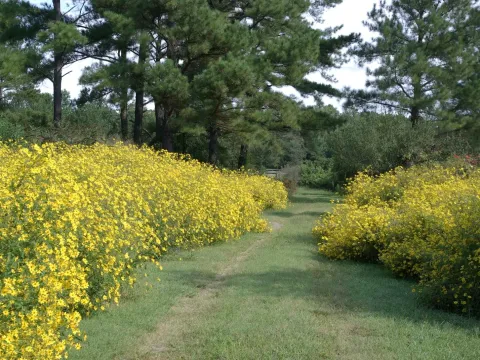
Crown beggarticks
Bidens coronata
Sowing of crown beggarticks (Bidens coronata) is typically performed in early spring as soon as the soil reaches a stable, warm temperature.
What the section contains
Crown beggarticks
The seeds should be sown in prepared, fine-textured seedbeds to ensure optimal germination and early development of the seedlings.
Spacing between rows should be maintained at about 50 centimeters to allow for adequate airflow and easy maintenance throughout the growing season.
Care must be taken to ensure the seeds are planted at a shallow depth, as deep planting can significantly reduce emergence rates for this species.
Regular irrigation following sowing is crucial, especially during dry spells, to maintain soil moisture levels necessary for successful seedling establishment.
Bidens coronata is a member of the Asteraceae family, thriving in environments with ample moisture and nutrient-rich, well-draining soil.
It prefers full sun exposure to maximize growth and the production of phytochemicals, which are essential for its various applications.
Soil pH should ideally be neutral or slightly acidic, as these conditions favor the availability of nutrients required for rapid vegetative biomass production.
Although it is a moisture-loving plant, it does not tolerate waterlogging, so proper site selection with good drainage is a critical management practice.
In regions with harsh summers, supplemental watering may be required to keep the plants from entering premature dormancy or experiencing stress.
Weed management is a top priority in the early stages of crown beggarticks cultivation, as the crop is initially slow to establish a canopy.
Aphids and other sap-sucking insects are common threats that can stunt growth and transmit viral diseases if not managed promptly.
Fungal pathogens such as powdery mildew can be problematic in dense plantings, particularly during periods of high humidity and poor ventilation.
Integrated pest management (IPM) strategies, including biological controls, are recommended to maintain plant health while minimizing chemical residues.
Frequent field scouting helps identify early signs of pest outbreaks or disease pressure, allowing for targeted and timely intervention.
The harvesting stage is critical for quality, and it must coincide with the full flowering period to ensure maximum concentration of bioactive compounds.
Plants are harvested by cutting the upper aerial parts, ensuring that the collected material is clean and free from soil contamination.
Efficiency in the harvest process is key; therefore, using mechanical harvesters or systematic manual collection methods is advisable for commercial scales.
Post-harvest handling requires immediate cooling or drying to prevent enzymatic degradation and loss of volatile components within the plant tissue.
Proper drying under controlled temperature conditions ensures that the final product maintains its integrity, shelf life, and commercial value.