
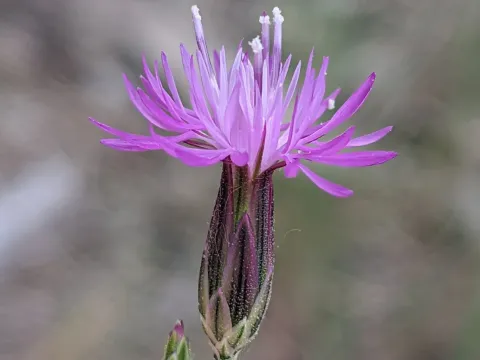
Crupina
Crupina
Crupina is a genus of herbaceous plants belonging to the Asteraceae family. In agricultural science, this plant is strictly classified as a weed rather than a crop, known for its aggressive growth patterns and invasive nature in various regions of the world.
What the section contains

Crupina
The genus originated in the Mediterranean, the Caucasus, and parts of Southwestern Asia. It has since spread to other temperate regions, often hitchhiking through international trade and agricultural machinery, becoming a significant pest in steppe and arid environments.
Crupina thrives in well-drained, often stony or sandy soils. It is remarkably drought-tolerant, which allows it to outcompete native grasses and forage species during dry spells, effectively monopolizing available water resources in disturbed soil habitats.
Botanically, plants in the Crupina genus are characterized by upright stems and distinctive, small flower heads. Their reproductive strategy relies on the high-volume production of seeds that can persist in the soil seed bank for several years, making eradication difficult.
There is no industrial or commercial use for Crupina. It is considered a nuisance in livestock grazing systems because it is not palatable to animals and often outcompetes valuable forage, leading to lower productivity and degradation of natural grassland ecosystems.
The primary threat posed by Crupina is the intense competition it provides against desired crops, particularly winter cereals. By absorbing moisture and nutrients early in the growing season, it stunts the development of cultivated plants, leading to substantial yield losses.
Effective management requires a combination of chemical control and proper crop rotation strategies. Because the seeds are easily transported, cleaning agricultural equipment between field operations is essential to prevent the spread of the weed to non-infested areas.
- Competition for nitrogen and soil moisture.
- Reduction of overall pasture biomass quality.
- Interference with the germination of agricultural crops.
- High potential for rapid colonization of fallow land.