
Crocidium
Crocidium
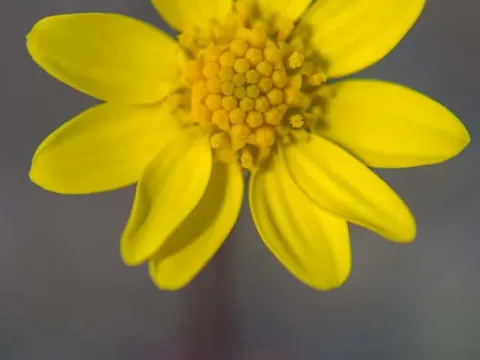
Crocidium, represented primarily by the species Crocidium multicaule, is a small annual herb belonging to the Asteraceae family. While not a commercial staple crop, it is a significant plant within the western North American flora, often referred to as common goldstar due to its bright, star-shaped yellow flowers.
What the section contains

Crocidium
The native distribution of Crocidium spans the western regions of North America, including areas in Washington, Oregon, California, and British Columbia. It thrives in open, sunny environments such as grasslands, meadows, and rocky slopes where the soil composition is typically light, sandy, or gravelly, facilitating excellent drainage.
Botanically, the plant is characterized by a basal rosette of succulent-like leaves from which multiple slender stems arise. Each stem carries a single radiate flower head with bright yellow ray florets. The plant typically reaches a height of 5 to 30 centimeters, showcasing a delicate architecture adapted to short-lived seasonal environmental niches.
As a spring ephemeral, the plant follows a specific phenological cycle. It germinates and grows rapidly during the moist, cool conditions of early spring, utilizes the available water, and completes its life cycle before the onset of the hot and arid summer months. This lifecycle is a strictly evolved response to the Mediterranean-like climate of its native range.
Successful cultivation requires mimicry of its natural habitat conditions. Key requirements include full sun exposure, a well-draining soil medium, and the avoidance of late-season waterlogging. Because it is highly sensitive to soil moisture levels once the seeds have matured, planting sites must be chosen carefully to prevent root rot and other moisture-related pathogens.